The Importance of Those Who Understand

The Importance of Those Who Understand

You know the moment when your bipolar episode takes over, but you don’t exactly notice it until a few seconds after it happened? Well, that happened to me yet again. I’m pretty sure I’m overthinking it, but simply put, I just say things I shouldn’t say. My mouth keeps going because my head won’t stop. I have dozens of thoughts all at once, and for me, I can see the connections. However, I know that what I’m saying doesn’t exactly make sense to others. This may be becoming one of those times, and if so, I apologize.

I openly discuss my bipolar disorder here, and with some of my family, generally with those that I feel or have shown to be understanding. Mental health is not an easy thing to understand, and I don’t want to put too much stress on anyone by telling them what’s happening, but I may have just done that. It will probably all be okay, but my mind has played out at least 30 different scenarios where I get in trouble. I wish I could stop this senseless thought wondering, but it’s part of who I am, and I just need to learn to deal with it a little better.

This is another reason why I find support groups so helpful. The friends that I’ve made at the support groups I’ve previously joined are there to help me through all sorts of events, even the ones that are only in my mind. I have become close with these individuals and I’m so grateful for that, especially with one individual. It’s a give and take relationship, but we empathize with and encourage each other. In my opinion, having someone who can empathize with me can make all the difference. Empathy is about being able to understand what someone is feeling because you have experienced it on your own, while sympathy is simply recognizing someone’s emotions and providing support. It makes me feel so much more comfortable knowing that I am not alone. That every thought and action, no matter how extreme, is also felt by others who love me.

This is not to negate the love and support from my family. Honestly, I prefer that they don’t completely understand my emotional state, I don’t wish that upon them at all. I’m grateful for the individuals that do not struggle with mental health issues. But for the individuals that can relate, it’s important to stick together. My husband keeps trying to get me to go to a new support group, and I put it off because I’m afraid. Yet now that I think about it, only good things can come from it as it has before.

 

Alone but Wearing a Mask

Alone but Wearing a Mask

How is it possible that I can be surrounded by people I’m comfortable with (which is not an easy task), yet I still feel alone? In fact, I tend to feel even more alone, lonely, and depressed than I do when I’m actually all by myself. Don’t get me wrong, it’s not like I feel good about myself when I’m all alone, but for some reason I tend to feel even worse about who I am when I’m surrounded by others. This is especially how I feel in the past couple weeks.

Feeling like this makes it extremely difficult to pretend everything is okay when in a group of people. I have become pretty good at faking okay. I have some automatic responses and a fake smile that goes along with those answers. It’s as if I’m wearing a mask, but I’ve recently found out that there are aspects of bipolar that I can’t cover up.
Masks 3-19-16
The extreme episodes can be read on my face, even if I can deter some of the manic or depressive behavioral changes. I have had people who work at stores that I regularly visit who have pointed out that they can tell something is wrong. Usually it’s my anxiety, panic, and restlessness that tell people I’m faking it. I’ve been told that my face shows how I’m really feeling, despite what I say or how I act.

I’m aware that any emotion I feel while either manic or depressed, is not always real. If I seem to be happy, it’s probably just because I’m manic and can’t sit still or control my emotions. And when I’m depressed, just because I fake a smile doesn’t mean I’m really happy or feel good. The truth is that lately, I pretty much feel alone, no matter what. This has nothing to do with my friends or family. I know that I am loved and supported, especially by my husband and my mother. But I can’t help how I feel or my mood swings. If only I could show people how much they mean to me, no matter how I feel, but that is not something that I see as a possibility, at least not for today.

The Importance of Support Groups

The Importance of Support Groups

There are many different types of treatment for any mental health disorder including but not limited to various types of medication, talk therapy, family education, rehabilitation, and support groups. I have especially found support groups to be helpful in dealing with and managing my bipolar disorder and PTSD. There are various types of support groups; some are for generalized mental health, while others specified for certain disorders.

I was very reluctant to go to a support group my first time because I was afraid. One of my PTSD symptoms causes me to be terrified of anything, especially anyone, that I don’t know. It’s a challenge for me to simply run errands; the thought of sitting next to another person and talking about my life seemed to be impossible. When I was in Connecticut, I researched support groups at my local hospital and found a weekly group called ‘Depression and Bipolar Support Group’. In the beginning, my mother came with me, she has always been extremely supportive of me in every way. It took many weeks to get comfortable with the others at the group, but soon, these individuals became close friends that I still talk to years later.

Going to a support group where the other people there have the same illnesses as you do is a comforting feature. I moved back to Arizona in 2009 causing me to leave my Connecticut support group and the friends I have there. Again, I was scared to start going to a new support group. Meeting new people and the intimacy of discussing what’s going on in your life and how you’re feeling is nerve-racking for me. My husband came with me in the beginning for this new group, ‘Taking Control’, which is also for bipolar and depression. Over time, the others in this group became my close friends who I still hang out with.

Each support group that I have been a part of has become a huge part of my life. The groups gave me a place to go and talk about my mental health issues where other people actually understand and relate to me. Sadly, my last support group was discontinued, but luckily I still talk to and see some other group members. I have found a new support group for bipolar depression called ‘Bipolar Bears’ (I love the name), but again, I’m extremely frightened to go. This is a new group for me, at a hospital that I’ve never been to, in a part of town that I don’t know. I’ve talked to a close friend from my last support group, and we have talked about going together; we will support each other, while we go to a support group. Now, I just have to get myself to actually do it.

Mental health support groups have helped me get through many difficult times and I suggest them to anyone and everyone who struggles with mental health. Being able to have people relate to the things we go through is a very comforting feeling. Meeting more people that help support you through your life is a blessing. Maybe this post will help me actually get to this new support group. I suppose I’ll find out soon enough.

ECT – Electroconvulsive Therapy

ECT – Electroconvulsive Therapy

Electroconvulsive therapy, ECT, is one way to treat severe depression and mania. The treatments are done under general anesthesia, allowing the doctor to induce a seizure by passing small electrical currents to the brain. ECT is known to be controversial because of how it was administered many years ago and the serious side effects it used to cause, but it is now much less dangerous.

I started ECT in February 2015 because no other treatments were working and I was desperate for something to help. In the beginning, I was doing the treatments 3 times a week for 4 weeks, then once a week for 4 weeks, then every other week for 8 weeks, and finally once a month. It has been a successful treatment for me. It has not solved all my problems or completely removed my depression, but it did get me out of a major depression when every other treatment failed. At this point, I want to stop the treatments, but I remind myself how beneficial they have been for me.

ECT is physically demanding the day of the treatments. I’m groggy (I assume from the anesthesia), I have confusion, my jaw hurts badly from the seizure clenching, and my body is overall exhausted. All of these symptoms go away within at least 24 hours. The only lasting effect I have is memory loss. Supposedly, the memory loss for most patients is temporary and only goes back a couple weeks or months at the most. Memories generally comes back shortly after treatment ends. However, my memory loss goes back years. I had even forgotten that my grandmother passed away, so I had to deal with her death all over again. Since I’m still doing monthly treatments, my memory does not improve. The cost is also a difficult aspect to handle, but all of the side effects and aspects are still easier to deal with than many months of a major depression with no relief.

Today was my 33rd treatment. It’s a lot on my body and mind. I don’t know how much longer I can handle these treatments. I know that my psychiatrist and my mother want me to continue with the therapy because they have been mostly successful. They are concerned about what will happen if and when I stop because of the success. This I understand, but I wish they would put themselves in my shoes. I feel that if ECT got rid of my depression and made me stable, then I would be happy to continue. However, I still take 7 different psych medications every day and an additional 2 medications as needed. In addition to all of that, we are going to be adding another psych medication within the next couple weeks. I also have to take 3 other medications for some medical conditions. I hope I get to stop ECT at some point, but I fear that if I do, I will regress to a horrible depression or mania.

Mixed Episodes – Feelings of Depression are Too Much To Handle

Mixed Episodes  – Feelings of Depression are Too Much To Handle

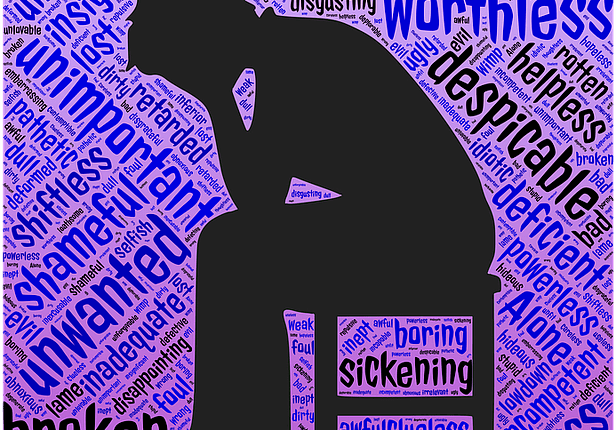
I feel worthless and pathetic pretty much every day. If I’m lucky, I’ll get a 20 or 30 minute reprieve during the day where I still feel horrible, but I don’t necessarily wish I was dead. I have not been lucky today. I am continuing to experience a lack of sleep and an excess amount of energy. My productivity is ongoing, I continued to deep clean various parts of our house and organize everything I could find. However, even though I remained physically energetic, my emotional side diminished into an even deeper depression.

From the moment I woke up today, I felt as if I could do nothing right. My mental state has been overall unworthy. My feelings are menial, shameful, worthless, insignificant, pathetic, stupid, and undesirable just to name a few things. Just as an example to the depths of my emotions, I watched a movie that is absolutely hilarious, but I wasn’t able to laugh at even one thing. I just stare at the TV, watching the movie and trying my best to sit still, and I listen to others laugh hysterically.

Normally I am capable of faking how I feel. I just put on a ‘happy mask’ and I don’t let people see how I’m really doing. I have been waiting all day for even the smallest part of my emotional state to change, but there have been no improvements. Honestly, I don’t really expect anything to change, I don’t deserve to feel better.

Tomorrow morning is my next ECT treatment. I’m not looking forward to it, but I will be extremely grateful if it can help even out my mixed episode. Feeling this depressed but not being able to sit still is extraordinarily excessive. It’s too much on my brain and my body. I wish I could allow myself to give up, but that’s not something I allow myself to do.

IV Ketamine vs Clozaril

IV Ketamine vs Clozaril

I know I need another form of treatment, and my psychiatrist is respectful enough to give me a choice. However, as stated in my last post, making any decision is extremely difficult. This decision feels as if it’s nearly impossible.

At first thought, IV Ketamine terrifies me. I used to get high off of Ketamine, I’m now 11 years sober, but the possibility of dissociation is what scares me the most, it brings back traumatic memories which trigger my PTSD. I’ve already tried Clozaril once and ended up with a fever around 2 weeks. I had no other symptoms and my weekly blood work came back completely normal. Even though Clozaril is a very risky medication, it doesn’t scare me like the IV Ketamine does.

The information I found out about Clozaril after research and talking to my psychiatrist:

  • Giving Lithium with Clozaril can help prevent the low white blood cell count with a 94.5% success rate. I am already on Lithium, so this is beneficial to me.
  • The risks of this drug are increased for me because I’m Ashkenazi, which is Eastern European Jewish heritage.
  • Only 1-2% of patients that take Clozaril develop agranulocytosis, a blood disease that increases the susceptibility to infection. Only 1-5% of patients may have seizures, but that can be avoided by titrating the dose up slowly.
  • Clozaril is 60% effective for patients.
  • I would have to do weekly blood tests for 6 months, then do blood tests every 2 weeks for 6 months. I could then go to blood tests every 4 weeks if there were no problems. Blood tests are required to get medication.
  • From what I understand, my worst case scenario is: I start to get a fever or other symptoms, I call my psychiatrist, he would send me to the hospital where I would get blood work done and they would make sure my fever goes down. Then I stop the medication again and have to try something else. This is what happened last time.

The information I found out about IV Ketamine after research and talking to my psychiatrist:

  • The IV Ketamine trial consists of the first 2 treatments, which are done within 1 week. I would generally start to see some type of result within 24 hours. If I don’t see results after the first 2 treatments it would be considered ineffective for me.
  • This treatment is very effective, and patients don’t have to wait 6 weeks for medication to start working.
  • I would be monitored at all times by a doctor. If I had a panic attack during the infusion, he/she would be able to treat me.
  • I can take something for my anxiety before the treatment to help me stay calm.
  • Some patients experience dissociation during the infusion. Dissociation can cause a lack of control mentally and/or physically. This is the part that is a trigger for me. Just writing about it now is causing a massive anxiety attack.
  • Maintenance treatments are done anywhere from every 3 weeks to every 3 months. Every patient is different.

Now that I have all of this research, I should be able to make a decision, but my indecisiveness is always there. I’m leaning more towards the Clozaril rechallenge. I understand the risks and as long as I immediately tell my psychiatrist about any symptom I have, I should be okay. I know I could get a fever again and it won’t work, but then my options will be narrowed down for me. I also have several reasons not to do the IV Ketamine. First of all, it terrifies me. I’m having an anxiety attack right now just thinking about it, what will happen when it’s time for the actual treatment? It is very expensive and not covered by insurance. The first 2 treatments are $600 each, and every maintenance treatment is $400. The IV Ketamine is also new to me, and new things scare me. I’ve done the Clozaril before so I know what to be on the lookout for.

The only reason I’m considering either is because the psychiatric benefits outweigh the medical risks. Writing this post has helped me realize how scared I am of the IV Ketamine. I don’t think I could handle the treatment. I think my best option is to rechallenge the Clozaril.


Inability to Make Decisions

Inability to Make Decisions

Making decisions never used to be a problem for me. I was able to make decisions for myself without any assistance; it wasn’t scary or anxiety-provoking. Then a couple months ago, decision making because a major problem in my life. To this day, deciding what I want is not only difficult, it can often be impossible. For me, when it’s time to make a decision, it feels as if I’m standing in front of a massive brick wall instead of standing at a fork in the road.

My husband will ask me what TV show I want to watch, and all I can do is stare at the options. One trick I’ve tried is ‘Eeny, meeny, miny, moe’. Yes, I know it sounds like I’m in grade school, but this is a serious issue. I honestly fight with myself every day to decide what I’m going to wear, when I’m going to complete certain tasks, which route I will drive to get somewhere, and more. I would even prefer to watch the same channel for hours that’s playing a show I don’t even like than trying to choose what TV show I do want to watch.

My therapist wants me to start making small decisions, and I have been, but not without a huge amount of effort and stress. I have figured out several times what to wear and what to cook for dinner. It seems as if others don’t understand that decision making causes anxiety or panic attacks some days. It’s more than being indecisive, it’s being incapable of making certain decisions.

My husband and other family members try to help by asking me what I want. Here’s the thing, I don’t know what I want, and being put on the spot to make a decision is petrifying. It feels as if no matter what I choose it will be wrong. The only thing I know I don’t want to do is anything new. Doing new things and going new places scare me and provoke anxiety attacks. I like repetition, the same schedule over and over is not boring to me, it’s comfortable.

Here’s the problem I’m presently facing. The medications I’m on and the ECT treatment I do every four weeks is not helping enough. All of it has made a huge difference from where I was at a year ago, but it’s not enough. The suicidal ideations won’t go away and I’ve changed from a depression to a mixed episode. My psychiatrist gave me three options for my next form of treatment. I already ruled one out (I’m proud of myself for doing that). But now, I still need to make a decision between two very difficult options. I have done extensive research on both choices. My next post will be about the choices I have, it’s too much for me to get into right now. My biggest concern is that if I can’t decide what I want to watch on TV, then how am I supposed to decide what my next form of treatment will be.


Excessive Talking Causes Problems

Excessive Talking Causes Problems

Everything I do is wrong, at least that’s how I feel. I just can’t make the people I want happy. I’ve felt like this for a long time now, so why do I keep trying? I’m sure it’s all in my head, but feeling like this on a regular basis is depleting. At least I’m aware of my irrational bipolar symptoms such as this one. I know deep down that I’m not doing everything wrong and making everyone unhappy; awareness is helpful to me.

It’s hard enough to do that when I’m not in a bipolar episode, how can I expect myself to do everything ‘right’ in the mixed episode I’m currently experiencing. One of the symptoms I’ve been dealing with is excessive talking, even to people I normally wouldn’t talk to. I’m constantly afraid I’m going to say the wrong thing or something inappropriate. I’ve done it before, so I’m sure I will do it again. The problem is that I can’t always control what comes out of my mouth. I try to stop myself from talking as much, but it doesn’t seem to have any effect.

It would be one thing if what I was saying made any sense, but it doesn’t. I struggle to stay on one topic. There are so many thoughts running through my head at one time,  I seem to bounce from subject to subject. I also tend to forget what I’m saying altogether. All of these things make normal conversations very difficult and generally unpleasant for the other person involved.

I think this blog is helping me get out some of my thoughts. I’m hoping it helps me reduce the amount of crap I convey to others. Writing can be a theraputic tool. I’ve never liked it, but at this point, I’ll try anything.

Bipolar Weight Gain

Bipolar Weight Gain

It’s been almost four months, and I have gained more than 20 pounds. I have gained most of the weight during the past month, which I don’t understand. This past month, I have been watching what I eat and working out for an hour a day, 5 to 6 days a week. The weight gain is definitely not muscle. If the weight gain isn’t from eating, then I would normally assume it’s from medication. However, the only med change I’ve had is the addition of the supplemental vitamin, Deplin, which is not supposed to cause weight gain.

So why do I keep gaining weight? I’m eating much healthier, working out regularly, and I’m more active in general (due to mixed and manic episodes). I keep trying and the only thing that happens is I gain even more weight. What am I supposed to do to get healthy, weight wise? I wonder how many other people experience this same struggle? Are there any suggestions? I’m just about ready to take Hydroxycut or some other weight loss pill, but I know that won’t mix well with my meds, and it will only add to my current mixed episode.

Weight gain is not something I’m willing to accept. The only thing I can think to do is to talk to my psychiatrist about it.


Never-ending Bipolar: Keep on Trying

Never-ending Bipolar: Keep on Trying

Lately, my bipolar feels like a never-ending staircase. The longer I’m on it, the harder it gets; as if I’m never going to win. Does anyone ever ‘win’ when it comes to mental health? Maybe, if you’re lucky, you can have a few months of remission, but then it starts again.

I  wasn’t even doing that well a couple weeks ago, but I was a whole lot better than I am right now. I found out about a friend who took his own life, and that triggered another episode for me (according to my doctor). I wasn’t even close with this guy anymore, but he was a good man. Apparently, it brought up every other death I’ve gone through. Not to mention I’m jealous that he had the guts to do it and he’s finally at peace. Why does my brain think like that? That’s a sick thought. I don’t want to commit suicide; I could never do that. But I can’t stop thinking about it.

I wonder what life is like for people who have control over their own thoughts and actions (I can’t always control myself during episodes). I keep doing all of the things that I know have helped in the past, and I’m trying some new methods as well. The only other thing left to do is wait; I get to wait to see if something is going to work.

I know what my life is going to be like. I will have many manic episodes, depressive episodes, and mixed episodes throughout the years. If I’m lucky, I’ll have a few months in between where I feel good, and that’s it. Maybe I’ll be able to work again someday, maybe I’ll be able to make new friends (I’m currently too scared to meet new people), maybe I won’t spend at least half my income on  mental health medical bills. Instead of wondering what could be, I just need to live in the moment. Today, in my mixed episode, I will be productive and do the best I can to manage my anxiety/panic attacks and my overall episode. I will keep climbing those stairs in hopes of a better solution in the future.