Bipolar and Addiction: There Is Hope

Bipolar and Addiction: There Is Hope

There are various statistics, but it seems that more than 50% of people diagnosed with bipolar disorder also struggle with addiction in some form, such as drugs or alcohol. When a person is diagnosed with bipolar disorder or another mood disorder, and also has a problem with drugs and/or alcohol, it is called dual diagnosis. I was diagnosed with dual diagnosis when I was 14 years old. My drug of choice was crack, but I would do whatever I could find; I also had a problem with alcohol. If anyone is thinking about a rehab, it’s important to research each treatment center you are looking at for yourself or your loved ones to make sure it can properly treat both your mental health disorder and your drug/alcohol addiction.

Dual diagnosis can make it more difficult to treat either disorder, but it’s not impossible. I’ve heard some people say that drugs and alcohol can bring on mental health episodes; and mental health episodes often lead individuals towards drug/alcohol use; both are true based on my own experience.

I know it’s possible to recover from dual diagnosis. I am 11 years sober, which is something I never thought I could say. On April 29, 2004, I went willingly to a yearlong rehab that also helped treat my bipolar disorder, and I have been sober ever since. I even worked there for 9 months after I completed the program. There is always hope, recovery from addiction is always possible. There is no single way to recover from addiction, every person is different. I got sober through the help of a 12 step program. What worked for me may not work for another person.

I feel the same way about treating bipolar disorder. I have tried so many different medications but I have not found the right combination of meds that works for this episode. Even though the meds may have previously worked, or are currently working for many others, it doesn’t mean they will definitely work for me. It’s basically a trial and error situation when treating mental health. That is really hard for me to accept, especially since I’ve been through so many meds. I want a fix, I want to feel better again; I’m not sure how much more patience I have. However, if I could recover from a severe drug and alcohol addiction at 19 years old, then I can hold on to hope for bipolar ‘remission’. I’ve had times in my life when I was not manic, depressed, hypomanic, or mixed. If it’s happened before, it can happen again. Anything is possible.

Clozapine Rechallenge – Day 4

Clozapine Rechallenge – Day 4

Last night I increased my dose to 75mg, per the request of my psychiatrist. I slept a couple hours in the bedroom before coming out to the couch; at that point, I was in and out for the rest of the night. At least I’m getting 6 or 7 hours of sleep each night, even if I can’t sleep through the night, it’s better than nothing.

The only side effect that I seem to have today is that my whole body is sore. Every muscle hurts, as if I just did a major workout a couple days ago, but I didn’t. It seems that this rechallenge is going pretty well. I will schedule an appointment with the lab to get my blood work done again tomorrow.

Productivity with Bipolar Disorder

Productivity with Bipolar Disorder

Being productive can be an extremely difficult task for those with bipolar disorder depending on their mood. Personally, I have no problem maintaining productivity when I’m manic. In fact, I can’t sit still during manic episodes; I’m always finding something to do. However, staying productive during a depressive episode is one of the most difficult challenges I face; it can even be difficult at times when I’m feeling well. I use the following techniques to help me stay productive and organized:

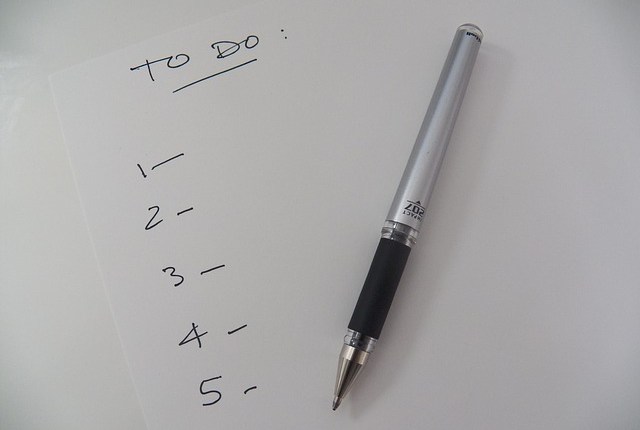
  • I make a to-do list every day. During depressive episodes, I write down some of the smallest tasks such as make the bed, feed the dog, brush my teeth, etc. Writing these things down helps me to see how much I actually get done every day. Once I complete a task, I cross it off my list; this shows me all of the things I’ve done each day.
  • When I’m really struggling with depression, I write down some tasks on my to-do list that I’ve already completed and cross them off. Then I can look at my list and feel more productive.
  • To-do lists not only help me stay productive, but they also help me remain organized. My mind tends to get easily distracted, so organizational skills are extremely important for me.
  • Taking medications regularly is vital. Our doctors prescribe these to us for a good reason; the meds can only really help us if we take them regularly, as prescribed.
  • Keeping a regular routine is also extremely important. This includes waking up and going to bed at the same time, showering at the same time, eating at the same times every day, setting aside a specific time each day to call friends or family, and working out at the same time every day are some examples of learning to keep a routine schedule.
  • A good night’s sleep is extremely important. It helps us to stay healthy. It’s important to sleep in bed instead of on the couch, and it’s also important in my experience to sleep at least 7 hours. If only I could follow my own advise for this one. Sleeping is something that’s easier said than done, but we can generally be more productive when we’re not tired all day long.
  • Exercise helps us feel good, and when we feel good, we are more productive. Walking the dog is a great form of exercise. Sometimes, all I can do is walk around the house, but it’s better than nothing. Sometimes I can do workout videos, but it’s not necessary to push yourself to do that much, as long as you do something.
  • Eating healthy is important. This is another one of my struggles. I tend to eat things that are easy to grab; or when I cook it’s generally unhealthy but tasty.

These suggestions are what I use to stay productive and feeling healthy. The to-do lists and taking medications are the things that work the best for me. I know I need to improve with the other healthy habits. They don’t always work, but it’s better when I try. Please remember that these suggestions are just from another person diagnosed with bipolar disorder, none of this information is from a doctor or medical professional.

Clozapine Rechallenge – Day 3

Clozapine Rechallenge – Day 3

I told my psychiatrist yesterday about the side effects I experienced. Even though they were getting better as the day went on, he decided that he did not want me to up my dose for day three. I ended up getting dizzy and weak feeling yesterday, but I think a lot of that had to do with the combination of the medication and anxiety; I went to a birthday party for a family member and felt a bit overwhelmed. Because of the side effects I had, I took 50mg again last night as instructed.

I had some trouble sleeping, but ended up getting a total of 6 or 7 hours. I wish I could sleep straight through the night, but I guess that’s not how it is for me. When I woke up for the last time this morning, I felt normal. I don’t notice any side effects or problems at all. I can’t wait to tell my psychiatrist. This is great progress and now I’m excited to continue the Clozapine instead of being nervous. My body is adjusting, it’s a good sign.

Explaining Mental Illness to Others

Explaining Mental Illness to Others

I get a lot of comments from people who don’t know that I’m diagnosed with bipolar and PTSD, and also from those that know and simply don’t understand. One family friend simply doesn’t understand. If we are out together in a group and my husband walks away for a moment, I tend to get anxious. I start to look around; making sure that nothing frightening is going to happen while my husband stepped away momentarily. His friend starts to tell me, “Don’t be anxious. Don’t worry, nothing bad will happen. Just relax.” I try to explain to him a little about anxiety and mental health, but he doesn’t get it. I feel invalidated and ridiculous by his comments; I end up feeling as if my emotional reactions are foolish and irrational. I’m not sure if I should bother explaining it to him again. He hasn’t understood it the first 5 times, why would he get it the next time? Even though I often feel uncomfortable in these situations, I accept this guy as a part of my life. I have hope that it will get better over time.

Not everyone is like that individual. I was at a family gathering yesterday for someone’s birthday. It was very obvious that I wasn’t feeling well. I explained that it was due to a new medication. Everyone that I talked to was understanding; some people asked a few extremely personal questions, but not one person was rude or dismissive. There is another person in this family that also struggles with bipolar disorder; they are accepting of her, but they don’t seem to understand much about the illness. Various people asked me questions such as, “Why aren’t you feeling well? How long have you been on this medication? What is this med supposed to treat? Why would you be willing to take something so risky or difficult? Don’t you think you can just get better with time?” Some of these questions were legitimate, some were a bit odd. I answered everything I could, and then I decided to provide some educational information.

I talked about NAMI (National Alliance on Mental Illness) and how it can help those diagnosed with mental illness and their families and loved ones. I talked about the NAMI Family to Family classes that are provided all over the country. I explained that my mother and sister took these classes shortly after I was diagnosed and how helpful it was for them. I described how it helped my mom and sister understand how my brain worked, what they should and should not do depending on the episode, and even how to take care of themselves. The couple people I talked to about this seemed quite responsive and even intrigued. It was really nice to have people seriously interested in what I had to say instead of ignoring me, even when I’m just answering their questions.

In my experience, family has always been supportive and caring; both my family and my husband’s family really seem to care about me and my wellbeing. No one always expresses themselves properly, but I do know that what they do always comes from love. Of course there will be times when they say the wrong thing, but that happens to everybody. In those situations, I need to remember that they didn’t mean anything by it, and that it is okay for me to stand up for myself by saying that my feelings are hurt.


Talk Therapy: Difficult Yet Beneficial

Talk Therapy: Difficult Yet Beneficial

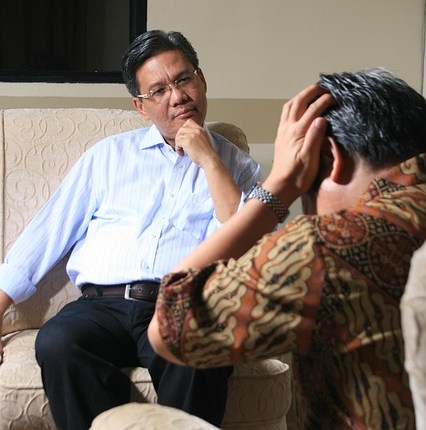
There are many forms of therapy that are known to help individuals with bipolar disorder and other mental health illnesses. Cognitive-behavioral therapy (CBT), dialectical-behavioral therapy (DBT), interpersonal therapy, psychotherapy (talk therapy) and family-focused therapy are just some examples. Therapy is a vital aspect of bipolar disorder treatment. I have been using therapy as a tool since I was 14 years old. As long as you have the right therapist, it is very helpful. The way I found the right therapist was just by trial and error. It was difficult, but I ended up very happy with my final choice.

I’m not really sure what form of therapy I’m using right now. I go in his office, he sits at a desk and I sit on the other side, it’s very informal and I like that. We have some things in common, for example, he is also from the east coast. I’m very comfortable with him and I’m comfortable in his office in general. Basically, I talk about what’s happening now, what happened in the past, and my fears, and he points out some patterns that I never noticed. Then, he provides some solutions and even gives me small easy steps to take to achieve these solutions. He holds me accountable. I suppose you could say that he helps me find and use tools to deal with situations that I encounter. He also helps me to have healthier relationships with anyone/everyone I know. He knows my triggers and makes sure to always respect them and my boundaries.

It took me a few years to be able to talk about the abusive relationship I was in. But one day, only a few months ago, I finally opened up. He was great about it. I didn’t feel judged or looked down upon. He doesn’t bring up certain aspects of it because he knows how much of a trigger it is for me. I think that the type of therapy I use is talk therapy, also called psychotherapy, but I could be wrong. No matter what, the therapy that I do is helpful; I wouldn’t do it if it wasn’t. Therapy is very difficult; it’s hard to talk about your life, problems, and difficult situations, especially face to face with another person. If you can get past these difficulties and the fears of talking about some of your most sensitive issues with a stranger, you will gain the benefits at some point, just hang in there.

Clozapine Rechallenge – Day 2

Clozapine Rechallenge – Day 2

Last night I took 50mg, as instructed. I had some problems falling asleep because I couldn’t breathe; I actually had to go get my inhaler and sit upright for about an hour. It’s a sign of an anxiety attack, except for the fact that I didn’t feel much anxiety. However, once I was finally able to fall asleep, I slept! I actually slept about 6 or 7 hours, and the best part is that I slept straight through the night! That almost never happens to me, I’m so excited.

Once I woke up, I noticed that I was a bit unsteady, but only if I bent over or was too active. So I’ve asked for help with things, and my husband was more than happy to assist me. I also noticed that I’m slurring some of my words, and I did wake up with a sore throat. The longer I’m awake, the better I feel. Both of these things are side effects of Clozapine. I will inform my psychiatrist, but I do not want to quit this medication so quickly. I’m prepared to tough it out.

Clozapine Rechallenge – Day 1

Clozapine Rechallenge – Day 1

Last night was my first dose for the Clozapine rechallenge. I took 25mg at bedtime (10:00pm), and I fell asleep quickly, probably within about 45 minutes. That’s a huge change for me, especially since I’ve been falling asleep anywhere between 2:00am and 5:00am for the past week or two. The pharmacist told me to make sure I take this medication close to the same time every night.

Falling asleep quickly is awesome, but the rest of the night was fairly awful. I woke up after about 1 hour. Then for the rest of the night, I slept approximately 20 minutes for every hour. So I spent the night falling asleep, then waking up, and then doing that all over again many times. I came out to the couch because laying in bed, feeling exhausted, but not able to sleep, is extremely frustrating. Waking up was very difficult; my eyes had a hard time staying open, but I think I’m fully awake now. I slept a total of about 3 1/2 hours, that’s not that bad for me.

The best part is that I have no dizziness, at least not yet. The last time I tried this medication, I had a lot of problems with dizziness. I think that it’s a good sign that I don’t have any dizziness issues at this time. I’m really hoping that my body will adjust to the medication better than it did last time. In my opinion, I feel like I’m off to a good start. My psychiatrist is increasing the dose slower this time than he did before, and I’m grateful for that.

Family Get-Togethers

Family Get-Togethers

My family (in-laws) likes to get together a lot, at least for every birthday and holiday. Honestly, I like that. Family is extremely important to me and they are always supportive. Only recently have I really started opening up about the depths of what’s going on with me, and I was pleasantly surprised as to how understanding and encouraging they were. They already knew about my diagnoses, but not the details about how I feel in the moment. Being more honest about my mental health state has made me feel more comfortable with them; I don’t feel like there’s anything I need to hold back anymore.

One thing I really struggle with is saying ‘No’, to anyone about anything. I don’t know why, but I would usually rather have an anxiety or panic attack than tell someone I can’t do something. I told my mother-in-law, who I am getting closer and closer with (and I love that), and she was extremely understanding. I even feel as if I could tell her ‘No’ and I wouldn’t freak out about it. It’s amazing what a little bit of honestly and openness will do.

Yesterday, I received an invitation from my husband’s aunt for a get-together that will happen tomorrow. I really want to go to this; I get along well with everyone. I’m going to call today and say I can go, but I’m a bit nervous because of the new medicine I started. I’m increasing my dose by 25mg every night; what happens if I can’t physically go at the last minute? I don’t like being the person that cancels last minute, but I can’t say how I will be feeling tomorrow evening because of this medication. It’s a different reason than I normally have for being nervous about get-togethers. Maybe I should just be completely honest and tell them everything I just wrote. Honesty is the best policy, even when it’s scary.

My husband’s family, which I consider to be my family instead of just my in-laws, is extremely important to me. Almost all of my side of the family lives in the North East, with a few people scattered around the US. However, I am the only one from my side of the family that lives in Arizona. All of my husband’s family lives near; I love that we have the ability to see them almost any time we want.


Problems Sleeping, Still

Problems Sleeping, Still

My sleep has been screwed up for the past 2 weeks. Some nights I only sleep 3 – 5 hours and others its 5 – 6 hours if I’m lucky. Only 1 night did I sleep less than 2 hours. I try to nap during the day, but it never works. I seem to be getting more done at night when I’m unable to sleep than I do during the day. I like things to be organized. Anything that can be organized alphabetically, is, including my filing cabinets, all my spices, and the apps on my phone. I also organize my spices by size and brand. Maybe that’s a bit excessive, but it makes me feel good to be organized. Being productive is something that helps me feel better, which is why I keep trying to get things done. If I can’t sleep, I think it’s better to be productive than just sit on the couch watching TV or waiting for the morning to come.

The only issue is that I feel that I need to stay quiet so I don’t wake my husband. Luckily he has ear plugs that he wears, but I’m still cautious. Just because I can’t sleep doesn’t mean he shouldn’t sleep either. I haven’t cleaned my house in 6 days. So if I can’t sleep again tonight, then I know what I’ll be doing.  I’ll dust every surface, clean the kitchen, clean the bathrooms, and anything else I can find to do, I’ll just do it as quietly as possible.

I start a new medication tonight, the Clozapine that I’ve been talking about, and I’m so nervous. I keep pretending I’m okay, but I’m not, I’m a wreck inside. I’m trying to think of the positives. The first thing that comes to my mind is that one side effect is drowsiness. Normally that would be a negative aspect, but since I’m not sleeping much, the drowsiness side effect could actually work in my favor. If I end up being tired and actually sleeping, I will just have to clean the house tomorrow.

My psychiatrist is fantastic. He asked me to check in with him every day to make sure that there are no problems. It’s nice to know that he will be available every day just in case I have an issue. It’s time to take my meds; I’m anxious, but I’m ready to find out how well it goes.