Anxiety While Shopping

Anxiety While Shopping

Running errands is a difficult task for me, and it always seems as if the errands are never ending. I’m comfortable in my own home for the most part, but when I leave my house, all of my fears start to take over. One of my biggest fears is having someone I don’t know come up behind me. My anxiety kicks in when I’m in public. I constantly look from side to side and front to back to make sure I’m aware of everything that’s going on around me.

There are certain stores that I hate going into on my own or at all. These stores have bright and fluorescent lighting, narrow aisles, and large display cases right at the entrance. These aspects cause anxiety and make me feel trapped and uncomfortable. I would prefer to go to a store that ends up costing me more money, than go to a store that brings out my anxiety. Even the regular store that I go to can sometimes cause anxiety; it all depends on how many people are there. It’s important for me to plan when I go shopping to avoid the crowds.

I also hate standing in line when it’s time to check out. There always seems to be someone behind me that doesn’t know what personal space means. This isn’t just at grocery stores; it happened to me the other day when I went to buy dog food. I despise going to the mall. I’ve actually only been once in the past year. I wasn’t alone, and despite that, I was still freaking out on the inside. These are some of the reasons why I try to buy as much as I can online.

There are so many things that I struggle to do, inside and outside of my home, which is why it’s important that I have a support system. My husband is great when it comes to helping me feel safe while we’re out. He will walk behind me so I know that he is the only person directly behind me. This especially helps while standing in lines. When I feel trapped in an aisle, I normally freeze, but he helps guide me through the store. He will put his arm around me, hold my hand, or hold onto my belt loop, making me feel more secure and ensuring that I don’t get lost. I can also go in on my own if absolutely necessary as long as I’ve taken Valium. I have progressed over time with the different activities that I’m capable of doing. Hopefully, over time, some of the regular errands I run will become easier for me to do.
How Much Longer…?

How Much Longer…?

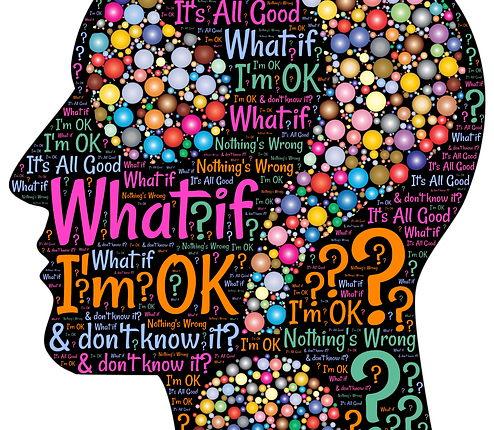
Do you ever wonder if you can make it? Even if it’s just for one more day, can you handle life that much longer? It seems that no matter what you do, everything is working against you. If you’re anything like me, it’s a daily burden that you have to deal with. I’m constantly asking myself, ‘Am I okay? What if…?’ Sometimes, when I’m able to think positively, instead of asking myself, I tell myself, ‘ I’m okay. Everything is good.’ I say these things even when I know they’re not true; I guess I say them hoping to convince myself that they are true.

I constantly worry about pretty much any situation you could think of. I’ve had some people tell me, ‘Don’t worry, just relax’, and honestly, that makes me want to punch them in the face. Do they really think I would choose to live like this? Would I honestly decide to have anxiety attacks every day and almost never feel safe or secure? Nobody chooses this life; it’s not enjoyable or manageable. Living without control over your own moods is torture. These types of symptoms, the constant anxiety, not feeling safe, and questioning if life is worth it, tear apart a person’s life piece by piece. My support system is the reason I keep going, but it’s not easy. I just want to give up most days, but for some reason, I don’t, I never give up.

I compliment those individuals who are able to live with these symptoms and the other bipolar and/or PTSD symptoms and continue living their lives entirely. Individuals that can go to work, take care of their families, maintain a home, and manage their symptoms are impressive; I admire these people. That used to be me. I had a full-time job, a full-time social life, and I maintained my own home. I miss being able to do that. I’ve been on disability since 2009, and I wonder every day if I’ll ever have that type of life back. Even my therapist is unsure if that will happen; he said so himself. He says that I’m working on learning to deal with these issues better.

I hope I’m not the only one that feels this way; I feel lost enough already, I don’t want to be lost and alone. Although at the same time, I really don’t want anyone, even someone I don’t like, to experience these situations and emotions. All I can do is to stay positive, even if it’s fake, I just think positively. I pretend that things will be okay; if you think something enough, eventually it could come true.

I Try To Be Honest

I Try To Be Honest

I almost always fake being okay. It’s not often that I actually feel well, but it’s so much easier to respond to people by simply saying ‘I’m good’ with a smile, than it is to tell people how life really is. Most of the time, I can’t even explain to myself how I’m feeling. The words are easier to say, but not easy; however, the smile can be extremely difficult, if not impossible at times. Usually, when people ask you how you’re doing, they’re doing it to be polite. So what’s wrong with a polite answer?

I was having trouble falling asleep last night, so I was watching TV and trying to figure out what was going on in my mind. Even though a big part of how I’m feeling is because of the Clozapine, some of it is my own mind, and it has really been bothering me. What I came to realize is that when I fake being okay to others, I’m actually lying to them; even if it’s just lying by omission. One of the few things I’ve truly been proud of over the years is my honesty, and now I’m unsure if I can even count that.

This doesn’t mean I have to tell strangers in passing about my life, but I should tell those that love and support me how I’m doing. However, I don’t know if I can do that. I haven’t even been able to be honest with myself regarding how I feel. It takes a lot of work to be able to honestly tell others how you’re feeling. I just assume that most people don’t really want to hear it. When you’re bipolar, how you’re doing can change from day-to-day and even moment-to-moment. I think the people who I need to be honest with are those closest to me. Sometimes I withhold information for a little while, but I always end up telling them at some point.

I used to think that I was an honest person; but I am wondering if I’m dishonest because I withhold information at times and fake how I’m feeling. No matter how much honesty comes out of my mouth, it’s still not all there. I can only think of a few people who really want to know, and I am always honest with these few individuals; my closest family, husband, best friend, and doctors, to the best of my ability. Maybe I can still think of myself as honest; I do my best to be honest with loved ones. Not one person is 100% honest; I guess this is where I cut myself some slack.

Maintaining Relationships

Maintaining Relationships

Relationships are particularly difficult when you’re dealing with bipolar disorder. Personally, I struggle when it comes to reaching out to those I care about. I prefer having just a couple close friends that I can trust, than having a large group of friends. It takes a lot of work to remember to reach out to friends and family. In fact, if I want to reach out to someone, I have to put it on my to-do list. Currently, I have a couple of close friends that I try to reach out to on a regular basis, and thankfully, they also reach out to me. My family members are not diagnosed with bipolar disorder, although my friends are almost all diagnosed with some type of mental health illness.

Having friends that also battle with mental health disorders is both positive and negative. It’s wonderful to have friends that understand what I’m going through, but that also means that these individuals deal with the same things that I struggle with, and I wouldn’t wish that upon anyone. I have had several friends of the past decade that I became close with; I will always be grateful for those relationships; however, I may be doing okay and my friend begins to go through an episode and distances themselves from me. This is difficult to handle, but I understand how and why it happens. It’s important to remember that when this happens, it’s usually due to their bipolar and mental health episodes and not because of me. I have had this happen to me several times, and I have also done this to others many times depending on state of mind. When someone who is diagnosed with bipolar disorder backs away from you, it is important to know that it is most likely because they are struggling, it’s not personal.

I’m currently attempting to reach out more to my family. I believe that family is the most important thing in life; no one will ever love and support you like your family does, at least that is my experience. Someone recently asked me how my relationship was going with one of my family members. I told him that it was improving; I have decided to reach out to them more often. The conclusion I have come to is that I cannot expect others to put forth any effort in our relationship unless I am willing to do the same. If I want to have a relationship with anyone, I need to work at it. Surprisingly, it’s a lot easier than I thought it would be. Even just a text message to say hello can mean a great deal to another person.

I’m working on reach out to my friends and family in many ways. Most of it is because of the support I receive. I use the following methods to help maintain my relationships:

  • I write on my to-do list who to call or text that day so I make sure it gets done.
  • I put things in my phone’s calendar as another reminder.
  • I listen to my husband; he often suggests appropriate things for me to do.
  • I make ‘dates’ with friends and family. Once something is scheduled, I’m very unlikely to cancel it.
  • I tell my loved ones how much they mean to me. I go through periods where I can’t express this at all, so I make sure to do so when I can.
  • I try to support and encourage my friends. Treat others as you want to be treated.
  • Relationships are hard for me; they’re also hard for others. I have to remember to cut others some slack; keep the expectations to a minimum.

Using these techniques, I have been able to maintain friendships, and I am happy to say that I have become closer with my family. Friends and family provide support, which is vital to my mental health.

Explaining Mental Illness to Others

Explaining Mental Illness to Others

I get a lot of comments from people who don’t know that I’m diagnosed with bipolar and PTSD, and also from those that know and simply don’t understand. One family friend simply doesn’t understand. If we are out together in a group and my husband walks away for a moment, I tend to get anxious. I start to look around; making sure that nothing frightening is going to happen while my husband stepped away momentarily. His friend starts to tell me, “Don’t be anxious. Don’t worry, nothing bad will happen. Just relax.” I try to explain to him a little about anxiety and mental health, but he doesn’t get it. I feel invalidated and ridiculous by his comments; I end up feeling as if my emotional reactions are foolish and irrational. I’m not sure if I should bother explaining it to him again. He hasn’t understood it the first 5 times, why would he get it the next time? Even though I often feel uncomfortable in these situations, I accept this guy as a part of my life. I have hope that it will get better over time.

Not everyone is like that individual. I was at a family gathering yesterday for someone’s birthday. It was very obvious that I wasn’t feeling well. I explained that it was due to a new medication. Everyone that I talked to was understanding; some people asked a few extremely personal questions, but not one person was rude or dismissive. There is another person in this family that also struggles with bipolar disorder; they are accepting of her, but they don’t seem to understand much about the illness. Various people asked me questions such as, “Why aren’t you feeling well? How long have you been on this medication? What is this med supposed to treat? Why would you be willing to take something so risky or difficult? Don’t you think you can just get better with time?” Some of these questions were legitimate, some were a bit odd. I answered everything I could, and then I decided to provide some educational information.

I talked about NAMI (National Alliance on Mental Illness) and how it can help those diagnosed with mental illness and their families and loved ones. I talked about the NAMI Family to Family classes that are provided all over the country. I explained that my mother and sister took these classes shortly after I was diagnosed and how helpful it was for them. I described how it helped my mom and sister understand how my brain worked, what they should and should not do depending on the episode, and even how to take care of themselves. The couple people I talked to about this seemed quite responsive and even intrigued. It was really nice to have people seriously interested in what I had to say instead of ignoring me, even when I’m just answering their questions.

In my experience, family has always been supportive and caring; both my family and my husband’s family really seem to care about me and my wellbeing. No one always expresses themselves properly, but I do know that what they do always comes from love. Of course there will be times when they say the wrong thing, but that happens to everybody. In those situations, I need to remember that they didn’t mean anything by it, and that it is okay for me to stand up for myself by saying that my feelings are hurt.


Talk Therapy: Difficult Yet Beneficial

Talk Therapy: Difficult Yet Beneficial

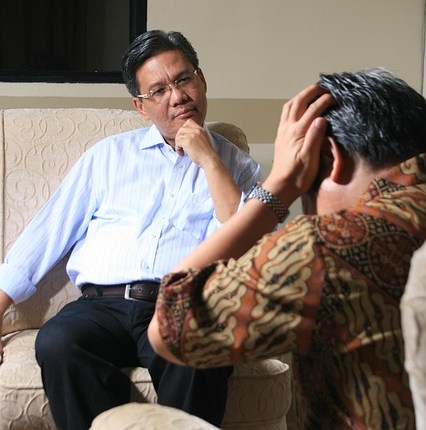
There are many forms of therapy that are known to help individuals with bipolar disorder and other mental health illnesses. Cognitive-behavioral therapy (CBT), dialectical-behavioral therapy (DBT), interpersonal therapy, psychotherapy (talk therapy) and family-focused therapy are just some examples. Therapy is a vital aspect of bipolar disorder treatment. I have been using therapy as a tool since I was 14 years old. As long as you have the right therapist, it is very helpful. The way I found the right therapist was just by trial and error. It was difficult, but I ended up very happy with my final choice.

I’m not really sure what form of therapy I’m using right now. I go in his office, he sits at a desk and I sit on the other side, it’s very informal and I like that. We have some things in common, for example, he is also from the east coast. I’m very comfortable with him and I’m comfortable in his office in general. Basically, I talk about what’s happening now, what happened in the past, and my fears, and he points out some patterns that I never noticed. Then, he provides some solutions and even gives me small easy steps to take to achieve these solutions. He holds me accountable. I suppose you could say that he helps me find and use tools to deal with situations that I encounter. He also helps me to have healthier relationships with anyone/everyone I know. He knows my triggers and makes sure to always respect them and my boundaries.

It took me a few years to be able to talk about the abusive relationship I was in. But one day, only a few months ago, I finally opened up. He was great about it. I didn’t feel judged or looked down upon. He doesn’t bring up certain aspects of it because he knows how much of a trigger it is for me. I think that the type of therapy I use is talk therapy, also called psychotherapy, but I could be wrong. No matter what, the therapy that I do is helpful; I wouldn’t do it if it wasn’t. Therapy is very difficult; it’s hard to talk about your life, problems, and difficult situations, especially face to face with another person. If you can get past these difficulties and the fears of talking about some of your most sensitive issues with a stranger, you will gain the benefits at some point, just hang in there.