Bipolar Creativity

Bipolar Creativity

It is a well-known fact that individuals diagnosed with bipolar disorder are often very creative. Many of us who have bipolar disorder are overloaded with creativity during manic and hypomanic episodes. Usually, in the beginning of these episodes, we tend to sleep less and be more productive and happy. There are many different forms of art including music, writing, artwork (drawing or painting), photography, videography, acting, and many more. Personally, I tend to write more and organize my house when I’m manic or hypomanic. I don’t see anything wrong with embracing your creativity during these episodes; however, it’s still important to follow-up with your doctors and attempt to balance out your life. There is a thin line between being creative and having psychotic episodes; it’s happened to me several times.

I recently received a gift from my mom, who knows how neat and organized I like everything to be. She gave me an adult drawing book and some colored pencils. What a great surprise! One of the coloring books she got me is all postcards; you color in on one side and write your message and address on the other side. I have been using it as an outlet for my frustration and my energy. Today, I finished my first piece of artwork. I had to throw my first one away because I wasn’t happy with the way it turned out. Now, I can go back and forth between writing and drawing. They are both wonderful therapeutic tools for me to use.

You don’t have to be manic or hypomanic to be creative, although it is more common during those episodes. You don’t even have to be bipolar. All I’m saying is that many artists are predisposed to mental illnesses such as bipolar disorder; and many individuals diagnosed as bipolar are predisposed to being some type of artist. There are many famous and successful artists that lived years ago, before people believed in mental illnesses. Some of these famous artists include Leonardo da Vinci had bipolar and dyslexia, Michelangelo had OCD, Isaac Newton had bipolar disorder, Beethoven had bipolar disorder, and so did Vincent van Gogh. There are and have been so many world-wide famous artists that struggled with bipolar disorder and other mental illnesses. I am inspired by these famous artists that struggled mentally but were very successful in their artwork. We don’t always have to look at our bipolar disorder as a deficit; sometimes there are good things that come out of the disorder, as long as we stay on top of everything and don’t let our episodes get too out of control.

Don’t Let Others Define You

Don’t Let Others Define You

It doesn’t take much for me to start feeling frustrated, upset, angry, and hurt. In fact, it happens pretty easily. Whatever the situation is, I do my best to talk myself through the frustration; I often end up pretending that everything is okay. I fake it until I make it. While this may not always be the healthiest way to manage emotions, it is fairly effective. However, there are sometimes that pretending everything is okay doesn’t work. I’ve tried over and over and, but still nothing has helped.

For example, a woman I’m very close with stopped reaching out to me. This is within her character; she is not a person that reaches out to just about anyone. At least I knew it wasn’t just me that she was ignoring. Our relationship had been strained, but was finally starting to improve, yet now that she was ignoring me again, everything started to become difficult again. I had reached out to her multiple times. I called a couple of times and left a voicemail, I sent text messages, and I also sent e-mails. Still, I heard nothing in return. I was frustrated, but mostly, I was hurt. I didn’t understand why everything was okay between us one day and then it wasn’t the next.

For a little while, I decided that I was going to stop reaching out to her. What’s the point of reaching out when you always get turned down or ignored? However, someone told me something that made me look at the situation in a completely different light. This person told me not to let other people define who I am or what I do. If I want to be someone who reaches out to friends and family, then I should continue to do that no matter what response I get. This made so much sense to me. I still want to have a relationship, so I should continue to reach out; maybe one day this person will reach out back to me. I should not change the things that I do and think of as important because of the actions of another person.

Family is the most important thing to me. So I need to keep reaching out to this person so that they know how much I care. If I stopped reaching out, then I couldn’t say that family is the most important thing to me. I am defined by many things such as my likes, dislikes, actions, and words to name a few. If I were to change how I act, then I would be changing who I am, and that’s not right. Also, if I ever want someone to reach out to me, then I need to reach out to them. It’s a two way street, and I’ve decided to keep my side of the street moving. The funniest part of it all is that once I made the decision to keep reaching out to this person, she responded to a text message. I’m glad I kept reaching out, because currently, the results are going pretty well.

I Completed My WRAP Plan

I Completed My WRAP Plan

I finally completed my Wellness Recovery Action Plan today; even though I started it over a month ago. I did complete most of it on my own, but I brought it to Connecticut with me so I could get some input from my mom. She was my caregiver for many years, and often still is, which gives her a different perspective than I have. She had some really great insights and ideas that I added to my plan.

My WRAP consists of a wellness toolbox, daily maintenance lists, what I’m like when I’m well, identifying my triggers, what to do if my triggers arise, a list of my early warning signs, symptoms that mean I’m getting worse, what to do when I’m declining, questions to ask myself, my crisis plan, who I give permission to make decisions for me, meds I refuse to take, what hospital to take me to, what to do if someone feels I’m in danger, and many more things. There is also a whole other section to be completed during or after a crisis, called post crisis planning.

The wellness toolbox is just a list of tools that I’ve found to be helpful for me. Some examples I listed are to listen to the song Jennifer’s Rabbit (my mom used to sing it to me when I was a child), cook, play the piano, or look through old photos. I also had to come up with a description of what I’m like when I’m feeling well. Some examples are that I sleep well, I don’t ignore my duties, and I’m willing to try things with the help of others. I also had to make a list of things I need to do for myself every day, weekly, monthly, and periodically. Examples range from taking medication daily, cleaning the house weekly, seeing my doctors monthly, and visiting family every 3 months.

I identified triggers that made my symptoms worse such as being in crowds, feeling judged, and a lack of sleep. I have a list of what to do when these triggers occur, like stand with my back to the wall in a crowd, tell my doctors when my sleep is off, and walk away when feeling judged. A list of helpful activities includes blogging, playing Sudoku, and taking the dog for a walk.

It also has a list for early warning signs which include increased negativity, increased foul language, and uncontrollable emotions. Things I need to do when I see these early warning signs are call my doctors, use my wellness tools, and take my medications. Other lists are about symptoms I have when I’m breaking down or getting worse. Some of my examples are extreme paranoia, hallucinations increase, and not making sense when I talk. A few of the things than might help at this point are to keep track of all symptoms, contact my doctor, and make sure the problems are not due to side effects. I also need to ask myself questions such as, ‘Am I rational and reasonable? Do my meds need adjusting? Do I need to consider hospitalization?’

There is also a crisis plan that goes over many of the same aspects; however, it also has a section for who should take over. I was able to make it clear that if I cannot take care of myself properly, then my husband, mother, and psychiatrist are allowed to make decisions for me. My one stipulation is that my husband and mother must agree on the treatments. I can also list who I don’t want involved in my treatment. Personally, I wrote that only my husband, mother, and psychiatrist have permission; no other family member or friend can make any decisions for me. WRAP also has a section on medications. I wrote in my current meds, dosages, and reason for taking them. I also wrote in what meds I refuse to take, and what meds I’m open to taking. I also said that I’m only open to other treatments that my husband and mother choose after doing thorough research. I wrote in which psych hospital I want to go to, and which one to never send me to.

The WRAP crisis plan is very thorough. I hope that I never have to use it, but it’s nice to have it, signed by my husband and mother, so I know that I will receive the treatment I want and need. Not only does it provide comfort to me because I know that my wishes are clearly stated and understood, but it also makes it easier for my husband and mother if and when they need to take over making decisions for me. I know that being a caregiver is an extremely difficult job; by completing my WRAP, I am attempting to make their lives easier.

I highly recommend that everyone who is diagnosed with a mental health illness take the time and complete a Wellness Recovery Action Plan. Hopefully you would never need to use it, but it’s nice to know it’s there just in case.

I Pushed Myself and I’m Grateful

I Pushed Myself and I’m Grateful

I pushed myself today, much further than I normally do. I took a Valium before I left with my mom, but the event was more than I expected. A friend of the family was putting on a fundraising party and we wanted to go and support it. We got there, and the parking lot was full. My heart started to beat out of my chest. We sat in the car for a little bit while I got the courage to go in. It only took about 5 minutes, and we went inside. I looked around and people were everywhere, both upstairs and downstairs. I stayed close to my mom, she makes me feel safe. I saw a couple of family friends that I wanted to see. We stayed about 30 minutes. I’m surprised I made it that long. People kept bumping into me and others were looking at me. I was terrified inside, and then my mom put her arm around me. I felt safe again. I was ready to go; I hate crowds and did not want to be there anymore. My mom knew by my body language that I was ready to leave, so she helped me make it out the door.

I was also worried that I was going to run into someone I grew up with, someone who I used to get high with. It really doesn’t matter, but I’m always afraid to run into some of these people. It’s really just a trigger, seeing people from my past. I have enough triggers already; I don’t need to add in people from my past. Luckily, I went to the event, stayed for 30 minutes, and left without running into a single person that I used to get high with. There were lots of people I know, but they were family friends, so that was okay.

We got to the car and my mom told me how well I did and how proud she was that I pushed myself to do that. I was still a little freaked out, but after a little while I was able to get myself to calm down. At that point, I was happy and grateful that I went to this event. I did it to show the person running in how much I care about her. Friends and family are important, and it is vital that we show them how much we care. I did the best that I could tonight. Everything was terrifying and felt awkward, but I did it. It was such a huge accomplishment for me. It’s okay to say no to some things, but it’s also okay to say yes. Today, I said yes, and I’m happy I did.

A Great Day

A Great Day

I did well today; better than I thought I would do. I got some things done around the house to help out. In the afternoon, I went to see my grandma and I had a great visit. Her health is declining and I tend to worry. We had several conversations; I love the fact that I can be open with her about my bipolar disorder and PTSD. There were several things she didn’t understand at first, but she listened to me explain various aspects of the disorders. She even repeated things back to me in her own words showing that she did grasp the concepts. I was able to explain to her how my moods can change suddenly; sometimes I am unable to laugh, sometimes all I can do is cry, and sometimes I feel nothing at all. She even tried to understand how my thoughts can take over my mind; how for the past many months, I have had suicidal ideations in the back of my mind. She asked how my ECT treatments are going and how I’m managing my medications. Even though she may not remember all of these things, she still cared enough to listen to my explanations and try to understand the disorders. Bipolar disorder and PTSD were not things that were considered ‘real’ when she was growing up. The fact that she can see them as real and care about my mental health means so much to me.

Then I was able to spend the evening with my mom. We went to dinner and a movie; we saw a chick flick, Mother’s Day. It was a good movie; not great, but not horrible. The best part of it all is that I got to spend time with my mom. I can talk to her about anything, and I’m not exaggerating. The two of us are happy doing anything, as long as we are together. Tomorrow, we are going to the Science Center to see a Leonardo da Vinci exhibit. I can’t wait to see it; the exhibit brings to life 40 of his inventions. I’m excited to have the opportunity to spend time with my mom; it’s a blessing that I’m extremely grateful for.

The best part of the day is that I didn’t take any Valium. There were probably a couple of times that it would have been beneficial, but I pushed through and did okay. I only want to take that medication when I absolutely need it. If I take it too often, then I build up a tolerance to it, and it doesn’t work as well. Today, I was able to get through my day without any Valium at all. That is a big deal for me. I’ve had other days that I didn’t take any, but I usually didn’t leave the house on those days. Today, I was out and about quite a bit, and I was able to manage it on my own.

Routines: A Plan Of Action

Routines: A Plan Of Action

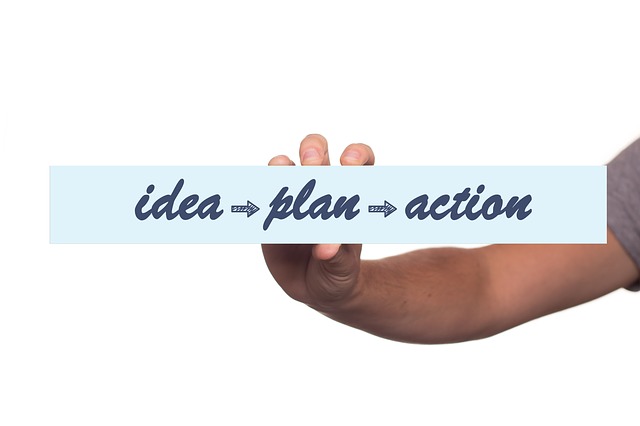
Maintaining routines is extremely helpful to me; it is a great way to help manage bipolar disorder. Routines require ideas, plans, and action; these things keep us active and help us to feel good when we accomplish our daily tasks. I know I should follow my routine more strictly by keeping to a regular sleep schedule and eating on a regular schedule, but those things are very difficult for me to regulate.

The routine that I do keep may not be as structured as it should be, but it works for me. First of all, I go to the same stores that I always go to when I run errands, even if they are further away or more expensive. I do that because I’m comfortable going to stores I know. I like to write in the mornings and evenings. I take the dog for a walk late at night; he has a reflective harness for our safety. I also try to run errands during the day before the stores get busy. Then I can do household chores later in the day. Every night, I write a to-do list for the following day. As I complete my tasks the next day, I cross them off my list. My to-do lists allow me to create a plan for the next day that I can take action on and complete.

I try to keep my routine flexible so that it’s easier when I have major changes. It’s more like a plan or structure instead of a strict routine. I’m not good with change, most of us aren’t. When I keep a very strict routine, I have a hard time when it comes to seeing family and friends. My flexible routine allows me to manage my life while still being able to get together with others, even at the last minute. I know it would be beneficial if I went to bed at the same time every night and ate at the same time every day. These are things that I can work on. Everybody is different, and everyone has different needs.

Right now, I’m visiting my family, so my routines are all messed up. I have lots of things I want to get done, so I made a to-do list as always. Hopefully, that will help me keep some structure in my life while I’m away. I’ve been trying to plan things such as visits with people, but it hasn’t been working very well. Some things have to be left up to chance.

Home From A Trip

Home From A Trip

Returning from a trip is exhausting. There is so much to catch up on, but I still have to unpack. We got home late last night; my husband went to go lay in bed after helping to empty the car. I decided it would be a better idea to unpack right then, than waking up to all of that work. As I was unpacking, my husband realized that we forgot something, a very important something, in the hotel. He was very upset about it, and I understood. I think I will drive back there today to go get it, if they still have it. Every time someone gets upset, I automatically think it’s because of me; I always feel as if I’m responsible, even when I’m not. Just because we got home last night doesn’t mean I have to complete everything I missed while I was away in just one day. There’s nothing wrong with catching up on things over a two or three-day period.

We had a great trip; it was a lot of fun. We went for a hike and saw some really cool hieroglyphics, we went to a ghost town and did a lot of stuff there, we went and saw a couple of movies, and we went to a friend’s wedding. I think the trip was a success. It’s just getting back to your normal life that is the exhausting part. To make matters even more confusing, I’m leaving to go across the country to see my family in 5 days. I can’t wait to see everyone. I love going back home; however, it’s a lot to do in a short amount of time. It will all be worth it in the end. In order to make things easier for my next trip, I should probably start by making a list of everything I need to pack. I should also find my luggage and do the laundry. I should start doing anything that will make my final day or two before I leave a little less stressful.

I should probably take some time for myself today, easier said than done. I don’t really know what that means. Whenever someone asks me what I want to do, I always say, “Whatever you want” or “It doesn’t matter to me”. I do that because I don’t really know what I want to do. Today, I have 12 years sober. It’s hard to believe it’s been that long. I wish I could look back and remember various times in my life, but ECT has made that extremely difficult. I know that it was hell when I was first getting sober and various times throughout the years. Maybe it’s all for the best that I can only remember snippets of things. I still don’t know what I’m going to do for myself today, but it will be something, even if it’s as simple as taking the dog for a nice walk. I need to do something for myself that I enjoy, and not something that has to get done.

Clozapine Rechallenge – Day 11

Clozapine Rechallenge – Day 11

Yesterday, I thought that it was going to be a great day because I felt pretty good when I woke up. However, I think I did too much. I ran some errands and went to visit a friend. When I got home, I crashed on the couch for about 2 hours, but I could only sleep about 10 minutes at a time. I didn’t expect to have this much exhaustion. I need to learn to only do a little at a time and allow myself to rest in between activities.

I stayed at the 100mg dose last night, but my psychiatrist also had me go off my Seroquel completely. I ended up sleeping pretty well, probably about 6 hours. I was worried I wouldn’t sleep because of my naps, but that wasn’t a problem. I did wake up with a lot of muscle soreness, but it was gone only an hour later. I was also unsteady on my feet, but that also went away quickly. I have no chest or throat pressure today. Right now, I feel pretty good. I have a lot to do today, and I’m going to do it one step at time, making sure I get to rest in between.

Finding Things To Enjoy

Finding Things To Enjoy

I’ve been told many times that finding something I enjoy doing will make me feel better and help me enjoy life again. However, I could never think of something I liked doing. One day, someone had me go over my daily activities to see what my interests were. It was at that moment that I realized I was already doing the things I enjoyed; I just wasn’t doing them for me. I found out that I already liked gift giving, cooking, cleaning, playing the piano, and working out. All I had to do now was start doing these things for myself.

It’s not easy to do any of these tasks, but I try to work my way up by doing the least physical activity first, which is gift giving. Cooking is also great; plus, I’m pretty good at it. When others enjoy the food that I cook, that’s just a bonus. I stopped cooking for other people, and I started to cook because I wanted to. Cleaning requires a lot of physical activity. I don’t necessarily like the actual cleaning part, but I love the end result. It’s important that I clean because I want to, not because I have to. Playing the piano brings back a lot of memories, especially of my father. Playing is an activity that helps me remember how lucky I was and still am. I recently started doing Zumba videos at home. I find it to be fun and energetic; it’s hard to do when you’re depressed because it takes so much physical energy, which is why it’s important to workout on a regular basis.

These 5 activities are things I already do in my daily life that I just need to start doing on a regular basis. They are healthy activities that help me and others; I already like doing them and I’m even good at these things. It’s vital to find and do things that we enjoy to help fight our bipolar disorder. Other people had to point these things out to me, and I had to be open to hearing what they had to say. Once I started doing these things for me instead of for others, I began to feel better about myself and even enjoy some of the days. For me, that is a huge improvement.

My therapist keeps telling me I give too much of myself. That I need to learn to do things that I want to do. So these are the things that I came up with; however, if someone asks me to do something, I almost always say yes. My therapist wants me to start learning to say no to people; I really don’t think that’s something I can do. I told him that I will work on one thing at a time; that’s all I can handle. Right now, I’m working on doing these activities for myself. That should be enough.