Physically And Mentally

Physically And Mentally

My body is just as screwed up as my brain. I had my first surgery when I was 16 years old; it was a cardiac ablation. My heart rate would randomly jump from normal up to 200 or more, and I would pass out. A year later, I had a tonsillectomy. In 2009, I had surgery on both of my knees. A year after that, I had a tubal ligation, which I will explain. I had a total hysterectomy in 2014.

The tonsillectomy is pretty much self-explanatory. I chose to have my tubes tied in 2009 when I was living in Connecticut. This was after my total breakdown. My psychiatrist had to write a letter explaining that I knew what I was doing and was making a sound decision. I decided that I have a hard enough time managing my life. I’ve had ups and downs; no matter how hard I try, I can’t always take care of myself. I’ve seen many people struggle with being a parent; it weighed on them so heavily. I didn’t want that to happen to me or my child. I decided it was better for me not to have a child. For me, this was the right decision, but it has been really hard. It’s been extremely difficult for me to not be able to have children. I often cry uncontrollably because of that fact. A year later, I ended up having to have a total hysterectomy because of severe endometriosis.

I pretend to be okay with the fact that I can’t have kids of my own. I’m a 31 year old grandma, who has never been a mother. Of course I wish I could have kids, but if I had to do it all over again, I would still make the same choice. I made the decision because it was the right thing to do for me, not because it was easy.

Right now, the most difficult problem I deal with physically is the interstitial cystitis. I currently get treatments every week; sometimes I can stretch it out to as much as every 3 weeks. The treatment involves getting catheterized so the doctor can put medicine directly into my bladder. This problem has been getting worse over time. I also have chronic bronchitis and pneumonia among other conditions, but luckily that’s not acting up as well.

I know that I’m luckier than many people, but I’m also worse off than a lot of others. Why do I have to have both physical and mental health problems? Why are all my problems chronic? Living with and managing physical pain as well as mental health is exhausting.


I Completed My WRAP Plan

I Completed My WRAP Plan

I finally completed my Wellness Recovery Action Plan today; even though I started it over a month ago. I did complete most of it on my own, but I brought it to Connecticut with me so I could get some input from my mom. She was my caregiver for many years, and often still is, which gives her a different perspective than I have. She had some really great insights and ideas that I added to my plan.

My WRAP consists of a wellness toolbox, daily maintenance lists, what I’m like when I’m well, identifying my triggers, what to do if my triggers arise, a list of my early warning signs, symptoms that mean I’m getting worse, what to do when I’m declining, questions to ask myself, my crisis plan, who I give permission to make decisions for me, meds I refuse to take, what hospital to take me to, what to do if someone feels I’m in danger, and many more things. There is also a whole other section to be completed during or after a crisis, called post crisis planning.

The wellness toolbox is just a list of tools that I’ve found to be helpful for me. Some examples I listed are to listen to the song Jennifer’s Rabbit (my mom used to sing it to me when I was a child), cook, play the piano, or look through old photos. I also had to come up with a description of what I’m like when I’m feeling well. Some examples are that I sleep well, I don’t ignore my duties, and I’m willing to try things with the help of others. I also had to make a list of things I need to do for myself every day, weekly, monthly, and periodically. Examples range from taking medication daily, cleaning the house weekly, seeing my doctors monthly, and visiting family every 3 months.

I identified triggers that made my symptoms worse such as being in crowds, feeling judged, and a lack of sleep. I have a list of what to do when these triggers occur, like stand with my back to the wall in a crowd, tell my doctors when my sleep is off, and walk away when feeling judged. A list of helpful activities includes blogging, playing Sudoku, and taking the dog for a walk.

It also has a list for early warning signs which include increased negativity, increased foul language, and uncontrollable emotions. Things I need to do when I see these early warning signs are call my doctors, use my wellness tools, and take my medications. Other lists are about symptoms I have when I’m breaking down or getting worse. Some of my examples are extreme paranoia, hallucinations increase, and not making sense when I talk. A few of the things than might help at this point are to keep track of all symptoms, contact my doctor, and make sure the problems are not due to side effects. I also need to ask myself questions such as, ‘Am I rational and reasonable? Do my meds need adjusting? Do I need to consider hospitalization?’

There is also a crisis plan that goes over many of the same aspects; however, it also has a section for who should take over. I was able to make it clear that if I cannot take care of myself properly, then my husband, mother, and psychiatrist are allowed to make decisions for me. My one stipulation is that my husband and mother must agree on the treatments. I can also list who I don’t want involved in my treatment. Personally, I wrote that only my husband, mother, and psychiatrist have permission; no other family member or friend can make any decisions for me. WRAP also has a section on medications. I wrote in my current meds, dosages, and reason for taking them. I also wrote in what meds I refuse to take, and what meds I’m open to taking. I also said that I’m only open to other treatments that my husband and mother choose after doing thorough research. I wrote in which psych hospital I want to go to, and which one to never send me to.

The WRAP crisis plan is very thorough. I hope that I never have to use it, but it’s nice to have it, signed by my husband and mother, so I know that I will receive the treatment I want and need. Not only does it provide comfort to me because I know that my wishes are clearly stated and understood, but it also makes it easier for my husband and mother if and when they need to take over making decisions for me. I know that being a caregiver is an extremely difficult job; by completing my WRAP, I am attempting to make their lives easier.

I highly recommend that everyone who is diagnosed with a mental health illness take the time and complete a Wellness Recovery Action Plan. Hopefully you would never need to use it, but it’s nice to know it’s there just in case.

Home From A Trip

Home From A Trip

Returning from a trip is exhausting. There is so much to catch up on, but I still have to unpack. We got home late last night; my husband went to go lay in bed after helping to empty the car. I decided it would be a better idea to unpack right then, than waking up to all of that work. As I was unpacking, my husband realized that we forgot something, a very important something, in the hotel. He was very upset about it, and I understood. I think I will drive back there today to go get it, if they still have it. Every time someone gets upset, I automatically think it’s because of me; I always feel as if I’m responsible, even when I’m not. Just because we got home last night doesn’t mean I have to complete everything I missed while I was away in just one day. There’s nothing wrong with catching up on things over a two or three-day period.

We had a great trip; it was a lot of fun. We went for a hike and saw some really cool hieroglyphics, we went to a ghost town and did a lot of stuff there, we went and saw a couple of movies, and we went to a friend’s wedding. I think the trip was a success. It’s just getting back to your normal life that is the exhausting part. To make matters even more confusing, I’m leaving to go across the country to see my family in 5 days. I can’t wait to see everyone. I love going back home; however, it’s a lot to do in a short amount of time. It will all be worth it in the end. In order to make things easier for my next trip, I should probably start by making a list of everything I need to pack. I should also find my luggage and do the laundry. I should start doing anything that will make my final day or two before I leave a little less stressful.

I should probably take some time for myself today, easier said than done. I don’t really know what that means. Whenever someone asks me what I want to do, I always say, “Whatever you want” or “It doesn’t matter to me”. I do that because I don’t really know what I want to do. Today, I have 12 years sober. It’s hard to believe it’s been that long. I wish I could look back and remember various times in my life, but ECT has made that extremely difficult. I know that it was hell when I was first getting sober and various times throughout the years. Maybe it’s all for the best that I can only remember snippets of things. I still don’t know what I’m going to do for myself today, but it will be something, even if it’s as simple as taking the dog for a nice walk. I need to do something for myself that I enjoy, and not something that has to get done.

Honesty Helps Fix My Lack of Control

It’s extremely difficult for people to manage their bipolar disorder. In fact, for me, it’s probably the hardest thing I’ve ever had to handle. I’ve dealt with the death of my father as a teenager, a drug and alcohol addiction, maintaining sobriety, a previous relationship that was physically and emotionally abusive, and the loss of several friends due to suicide or drug addiction; these things are only a few of the circumstances I’ve dealt with, and for me, none of them compare to dealing with my bipolar disorder on a daily basis.

To me, it feels as if I often don’t have control over my own brain, mouth, and even my body. I frequently find myself saying things that should not be said or doing things that I should not do. My brain is always running, always thinking, it doesn’t take a break. I’m generally thinking about all of the things I did wrong, but I also think about different options I have, I’m on overload. My mind has no balance. It feels as if I have no control over my own mind. It jumps from subject to subject, never thinking any thought completely through. I often act on my emotions instead of logical thinking. I do the best I can to make the right choices, but when it’s left up to my brain, I never know what the results will be like.

I know this sounds weird, but I love rules; any set of instructions or guidelines that I can follow make my life easier. I don’t have to listen to my brain or attempt figure out what the right thing to do is. I don’t worry about my lack of control over myself, I simply do what I’m told is the right thing to do. I have a hard time being dishonest about anything. I know that honesty is the best policy, but sometimes there is such a thing as too much honesty. If I’m not completely honest with others, my mind keeps telling me how horrible I am, and then I can’t function or sleep. I’ve lived the majority of my life without control, following rules gives me control; it gives me power.

I no longer have to struggle to organize my mind to figure out what I should and should not do, I no longer have to worry if every single thing I did was right or wrong, and I no longer have to worry if I can live with the choices I made. As long as I am honest to the best of my ability, I feel free from the bipolar restraints and the lack of control that comes along with it; I can find balance in my life. Following rules and being honest is so much easier than doing anything else; there are already a set of instructions laid out for me, giving my mind some peace and quiet, which is something that almost never occurs. Of course my mind doesn’t stop, and there are still so many thoughts going on in there, but at least I don’t have to figure everything out on my own. I encourage others to try being honest and follow rules if they’re comfortable doing so, even if it’s as simple as following the instructions on a recipe or game. Maybe it will work for you, maybe it won’t, but I hope that it does, because I would really love to share the peace that it brings me.

Family Get-Togethers

Family Get-Togethers

My family (in-laws) likes to get together a lot, at least for every birthday and holiday. Honestly, I like that. Family is extremely important to me and they are always supportive. Only recently have I really started opening up about the depths of what’s going on with me, and I was pleasantly surprised as to how understanding and encouraging they were. They already knew about my diagnoses, but not the details about how I feel in the moment. Being more honest about my mental health state has made me feel more comfortable with them; I don’t feel like there’s anything I need to hold back anymore.

One thing I really struggle with is saying ‘No’, to anyone about anything. I don’t know why, but I would usually rather have an anxiety or panic attack than tell someone I can’t do something. I told my mother-in-law, who I am getting closer and closer with (and I love that), and she was extremely understanding. I even feel as if I could tell her ‘No’ and I wouldn’t freak out about it. It’s amazing what a little bit of honestly and openness will do.

Yesterday, I received an invitation from my husband’s aunt for a get-together that will happen tomorrow. I really want to go to this; I get along well with everyone. I’m going to call today and say I can go, but I’m a bit nervous because of the new medicine I started. I’m increasing my dose by 25mg every night; what happens if I can’t physically go at the last minute? I don’t like being the person that cancels last minute, but I can’t say how I will be feeling tomorrow evening because of this medication. It’s a different reason than I normally have for being nervous about get-togethers. Maybe I should just be completely honest and tell them everything I just wrote. Honesty is the best policy, even when it’s scary.

My husband’s family, which I consider to be my family instead of just my in-laws, is extremely important to me. Almost all of my side of the family lives in the North East, with a few people scattered around the US. However, I am the only one from my side of the family that lives in Arizona. All of my husband’s family lives near; I love that we have the ability to see them almost any time we want.


Wellness Recovery Action Plans

Wellness Recovery Action Plans

I decided to complete the WRAP (Wellness Recovery Action Plan) paperwork. I did one years ago when I lived with my mother, and it was very helpful. It could probably help out my husband as well. WRAP helps people figure out and integrate wellness tools and healthy strategies into their lives. It helps both those with mental health illnesses and their caregivers. It asks open-ended questions and statements such as how are you when you feel well, what do you do to stay well, what are your triggers, what do you do when your triggers emerge, what are your early warning signs, and what are signs that you’re about to break down. These questions are just the beginning of the documents. It will take a while to complete. I will probably ask my husband and mother to help me complete my WRAP.

I think it can be a vital part to the maintenance and recovery of those with mental illnesses to have this type of information documented. The thing I like the most about the WRAP is that it helps us create a crisis plan; informing our loved ones and caregivers exactly what we do and don’t want, such as meds we do and don’t want to take, what hospitals we do and don’t want to go to, and who we are willing to let take control in a crisis situation. Completing the WRAP documents gives those of us with mental health illnesses a voice; we get to make decisions when we are well about how we want to be treated when we are sick.

The WRAP that I chose is from NAMI (National Alliance on Mental Illness) in Austin, TX. It can be found using the link below. By Googling ‘Wellness Recovery Action Plan’, you can find many different options, and if you choose to do one, simply choose the one that’s right for you. It’s not easy to complete; it takes time in order to be thorough. It has helped me and my mother before, I’m sure it will be helpful again.

Click to access Developing-a-WRAP-Plan.pdf


Blood Work Starts Now

Blood Work Starts Now

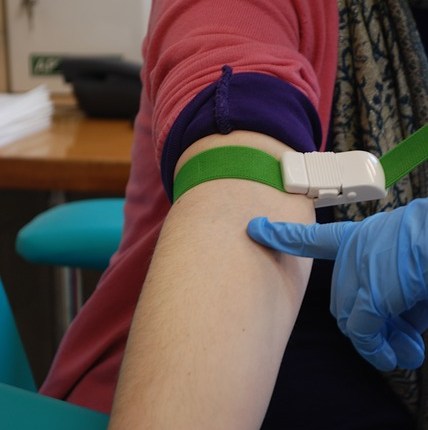
As my husband left for work this morning, he brought the mail inside. One of the envelopes was from my psychiatrist. It contained a weekly standing order for blood work to monitor the Clozaril along with a prescription that I can give to my pharmacy once I hear back from my doctor about my blood work.

I wasn’t nervous until just now. In fact, I was slightly excited to start Clozaril because I was hoping it would help level me out and particularly get rid of my hallucinations. I was thinking that it could be the solution I’ve been waiting for. However, now that it’s time to start the process, my heart started to pound, chest pains developed, my breathing quickened, I became sweaty, I started rocking back and forth when sitting, and I couldn’t remain still when standing. Basically, it was a minor anxiety attack. I didn’t know where my fears were coming from. I don’t like anything new, but this isn’t new. This is a rechallenge. I tried it for the first time last summer with no success.

I still want to believe that it will work out, but right now, I’m not so sure. I worry that my Ashkenazi genes will cause problems again. My mind is going a million miles an hour, and it’s going to some bad places. I keep thinking that if this doesn’t work, then there’s no hope left for me. Technically, I know that’s not true, but sometimes fear takes over the mind. There are still a few other options, even though I really don’t like them, they are there. And there is always research being done resulting in new medications and treatments that are often very successful. Will I ever be a part of the success when it comes to treating my bipolar disorder? It’s been a long time that I’ve been unstable; it just makes me question a lot of things.

I simply needed to get all of these thoughts out of my head so I don’t continue to obsess over all of it. I think this has helped clear my mind even just a little. At this point, I feel calm enough to drive, and that’s all I needed. I have stopped shaking and I can breathe better. I don’t have to leave for another 40 minutes. I’m going to take that time to continue calming myself.


Not Having Kids is a Choice I Struggle With

Not Having Kids is a Choice I Struggle With

For multiple reasons, I cannot have children. In 2010, I decided to have my tubes tied. This was an extremely difficult decision. I made my decision because I know what I’m like when I’m manic and when I’m depressed. I have had many episodes over the years, I’ve even lost track of how many, and I came to the realization that there have been many times that I could not take care of myself; I was afraid to be responsible for a child. Also, I have always been on a lot of medication and I was scared to go off the meds during a pregnancy. With the help of my therapist, support group, mother, and friends, I made the decision to have my tubes tied. It was one of the most difficult decisions I’ve ever had to make, but I am grateful for my decision, it was the right thing to do for me. However, my heart breaks any time I see a small child.

Then in 2014, I ended up having a total hysterectomy due to ongoing medical problems. Even though I already had my tubes tied, it felt like a major loss. The surgery went well, but I have struggled emotionally with it ever since. My husband already has two kids, ages 22 and 24 (yes, I married a man that’s older than me). It works perfectly for several reasons; I can’t have children and he doesn’t want any more, we love each other, and we’re best friends (we had been best friends for years before we even started dating).

I get along great with both of his kids. His daughter, my step-daughter, had a baby this past September. I am a 31 year old, extremely proud grandma. We both love every second we spend with our beautiful granddaughter. It can be emotionally difficult for me. I frequently wish that I could have my own children, but I still know that I did the right thing for me. Every person is different; when making any decision, it’s important to make the right choices for you. I made the right decision for me, but that doesn’t take away the difficulty. Just because it was right for me, does not mean it’s easy. I was hoping it would get easier over time, but I’m still waiting for that to happen. Every time I see a baby, baby clothes, or toys, a part of me saddens. At the same time, another part of me is grateful because I know I made the right decision for myself.

At times I can feel jealous of those that are able to have children and deal with mental health disorders. I’m just not someone that can do that. I believe that the only thing that matters is that every person makes the right choices for their own life. No matter how difficult it can be to deal with, I made my right choice.

IV Ketamine vs Clozaril

IV Ketamine vs Clozaril

I know I need another form of treatment, and my psychiatrist is respectful enough to give me a choice. However, as stated in my last post, making any decision is extremely difficult. This decision feels as if it’s nearly impossible.

At first thought, IV Ketamine terrifies me. I used to get high off of Ketamine, I’m now 11 years sober, but the possibility of dissociation is what scares me the most, it brings back traumatic memories which trigger my PTSD. I’ve already tried Clozaril once and ended up with a fever around 2 weeks. I had no other symptoms and my weekly blood work came back completely normal. Even though Clozaril is a very risky medication, it doesn’t scare me like the IV Ketamine does.

The information I found out about Clozaril after research and talking to my psychiatrist:

  • Giving Lithium with Clozaril can help prevent the low white blood cell count with a 94.5% success rate. I am already on Lithium, so this is beneficial to me.
  • The risks of this drug are increased for me because I’m Ashkenazi, which is Eastern European Jewish heritage.
  • Only 1-2% of patients that take Clozaril develop agranulocytosis, a blood disease that increases the susceptibility to infection. Only 1-5% of patients may have seizures, but that can be avoided by titrating the dose up slowly.
  • Clozaril is 60% effective for patients.
  • I would have to do weekly blood tests for 6 months, then do blood tests every 2 weeks for 6 months. I could then go to blood tests every 4 weeks if there were no problems. Blood tests are required to get medication.
  • From what I understand, my worst case scenario is: I start to get a fever or other symptoms, I call my psychiatrist, he would send me to the hospital where I would get blood work done and they would make sure my fever goes down. Then I stop the medication again and have to try something else. This is what happened last time.

The information I found out about IV Ketamine after research and talking to my psychiatrist:

  • The IV Ketamine trial consists of the first 2 treatments, which are done within 1 week. I would generally start to see some type of result within 24 hours. If I don’t see results after the first 2 treatments it would be considered ineffective for me.
  • This treatment is very effective, and patients don’t have to wait 6 weeks for medication to start working.
  • I would be monitored at all times by a doctor. If I had a panic attack during the infusion, he/she would be able to treat me.
  • I can take something for my anxiety before the treatment to help me stay calm.
  • Some patients experience dissociation during the infusion. Dissociation can cause a lack of control mentally and/or physically. This is the part that is a trigger for me. Just writing about it now is causing a massive anxiety attack.
  • Maintenance treatments are done anywhere from every 3 weeks to every 3 months. Every patient is different.

Now that I have all of this research, I should be able to make a decision, but my indecisiveness is always there. I’m leaning more towards the Clozaril rechallenge. I understand the risks and as long as I immediately tell my psychiatrist about any symptom I have, I should be okay. I know I could get a fever again and it won’t work, but then my options will be narrowed down for me. I also have several reasons not to do the IV Ketamine. First of all, it terrifies me. I’m having an anxiety attack right now just thinking about it, what will happen when it’s time for the actual treatment? It is very expensive and not covered by insurance. The first 2 treatments are $600 each, and every maintenance treatment is $400. The IV Ketamine is also new to me, and new things scare me. I’ve done the Clozaril before so I know what to be on the lookout for.

The only reason I’m considering either is because the psychiatric benefits outweigh the medical risks. Writing this post has helped me realize how scared I am of the IV Ketamine. I don’t think I could handle the treatment. I think my best option is to rechallenge the Clozaril.


Inability to Make Decisions

Inability to Make Decisions

Making decisions never used to be a problem for me. I was able to make decisions for myself without any assistance; it wasn’t scary or anxiety-provoking. Then a couple months ago, decision making because a major problem in my life. To this day, deciding what I want is not only difficult, it can often be impossible. For me, when it’s time to make a decision, it feels as if I’m standing in front of a massive brick wall instead of standing at a fork in the road.

My husband will ask me what TV show I want to watch, and all I can do is stare at the options. One trick I’ve tried is ‘Eeny, meeny, miny, moe’. Yes, I know it sounds like I’m in grade school, but this is a serious issue. I honestly fight with myself every day to decide what I’m going to wear, when I’m going to complete certain tasks, which route I will drive to get somewhere, and more. I would even prefer to watch the same channel for hours that’s playing a show I don’t even like than trying to choose what TV show I do want to watch.

My therapist wants me to start making small decisions, and I have been, but not without a huge amount of effort and stress. I have figured out several times what to wear and what to cook for dinner. It seems as if others don’t understand that decision making causes anxiety or panic attacks some days. It’s more than being indecisive, it’s being incapable of making certain decisions.

My husband and other family members try to help by asking me what I want. Here’s the thing, I don’t know what I want, and being put on the spot to make a decision is petrifying. It feels as if no matter what I choose it will be wrong. The only thing I know I don’t want to do is anything new. Doing new things and going new places scare me and provoke anxiety attacks. I like repetition, the same schedule over and over is not boring to me, it’s comfortable.

Here’s the problem I’m presently facing. The medications I’m on and the ECT treatment I do every four weeks is not helping enough. All of it has made a huge difference from where I was at a year ago, but it’s not enough. The suicidal ideations won’t go away and I’ve changed from a depression to a mixed episode. My psychiatrist gave me three options for my next form of treatment. I already ruled one out (I’m proud of myself for doing that). But now, I still need to make a decision between two very difficult options. I have done extensive research on both choices. My next post will be about the choices I have, it’s too much for me to get into right now. My biggest concern is that if I can’t decide what I want to watch on TV, then how am I supposed to decide what my next form of treatment will be.