So Many Meds

So Many Meds

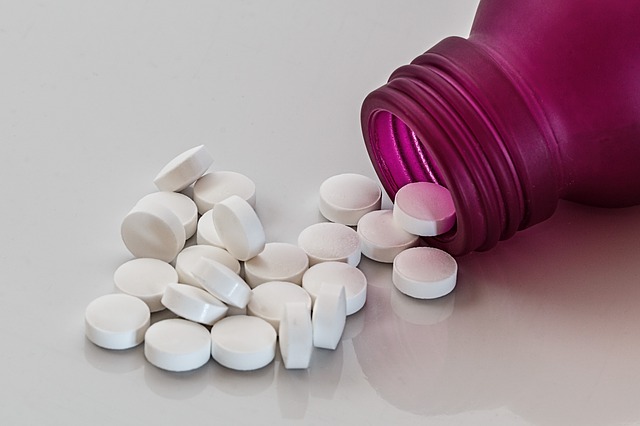
Sometimes I feel like I take too much medication. I take Lithium, Tegretol, Clozapine, Cytomel, Mirapex, and Valium for my bipolar disorder and anxiety. I take Zofran, Cogentin, and Metformin because of side effects from my bipolar medication. I have to take hormone replacement therapy because of my hysterectomy. I also take Percocet and Elmiron for my bladder disorder. It’s a long list of medication.

One of the meds has to be taken on an empty stomach twice a day, but some of my other meds have to be taken with food. I take medication about 6 times a day, sometimes more, depending on when I eat. It feels like all I’m doing is taking medication. I hate the fact that so many of my medications are treating side effects of other meds, but I guess that’s how it goes.

I’ve been hoping that one day I won’t have to take medication, but realistically, I know that won’t happen. This is just something that I have to deal with. I think I wouldn’t care about it as much if the meds actually worked. My depression has improved, but my suicidal ideations are still there. In the end, I know that I’m a lot better off taking these meds than I am without them.

Psych Appointment

Psych Appointment

Yesterday was my appointment with my psychiatrist. It went really well. I brought a list of everything I wanted to talk to him about, so I wouldn’t forget anything. It was very helpful. He listened to everything I said as well as all of my requests.

I am now off Deplin, because I don’t feel that it has helped at all. He increased my Cogentin at night for the dystonia, just like I asked. He also said I could get off of the Inositol since it wasn’t working either.

I talked to him about the twitches I’m having in my hands that cause me to drop things. He said there was a name for it, but the only solution would be to go off some other meds, such as Lithium and Tegretol. I don’t want to do that at this time. I told him about the extreme nausea that’s been happening this past week, but we both agreed that it’s most likely from Elmiron, which I take for my bladder disorder. The Clozapine is causing the drowsiness during the day.

He is also going to check my thyroid level, Lithium level, Tegretol level, blood sugar level, and cholesterol. I’m very pleased with this appointment.

When I got home, I took a nap that lasted about 6 hours. I don’t know why that happened, but I couldn’t keep my eyes open. I feel better so far today.

Mid-Flight Travels

Mid-Flight Travels

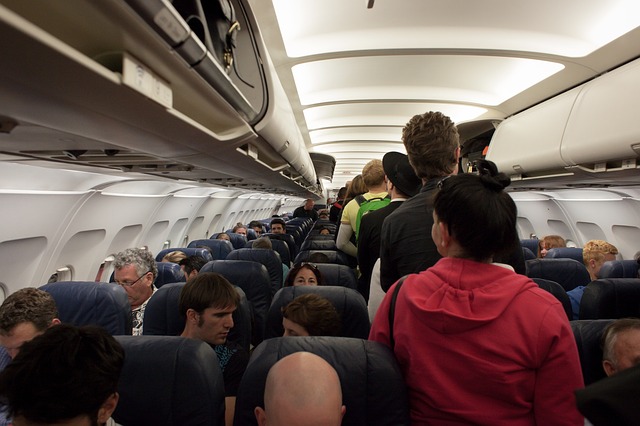
While I am writing this mid-flight, I won’t be able to post it until the next day. I’m almost halfway through my flight, and my anxiety is starting to rise. I took a Valium before I boarded the plane because I have a middle seat. I hate sitting in the middle, I feel so crowded and confined. Every time I move, I touch one person or another. After eating something, I tried sleeping. I fell asleep, and I thought I slept a while, but when I woke up, only 15 minutes had passed. For some reason, if I fall asleep after taking Valium, it wears off when I wake up, no matter how short or long the duration of my rest is. I’m curious if that happens to anyone else. If that does happen to you, please tell me so I know I’m not alone.

The Valium has worn off and there’s still 2 ½ hours left on the flight. I tried playing Sudoku for a little while, but I can’t concentrate because I keep accidentally bumping into other people that I don’t know. So I thought I would take out my computer and do a little writing. I need to do something, anything, to occupy my mind. I’m trying so hard to stay relaxed and keep my anxiety down. I’m saying positive phrases in my head. You can do this; you’re already half-way there. However, this is not helping. My mind just keeps freaking out every few minutes. I’m holding it all in. By the way, I’m not afraid of flying. The problem is being surrounded by strangers and crowed; every time I move, I touch someone. It might be time to take another Valium. It has been about 4 hours since my last dose, and I felt the effects of that dose wear off already.

I normally don’t take my Valium as often as I’m allowed to. I can take 10mg twice a day; however, most days I don’t take any. A one month supply usually lasts me anywhere from 2 to 4 months. I take it when necessary, like when I leave my house. I don’t go out very often except to run errands.

I’m able to calm myself a little bit while I wait for the meds to kick in. I control my breathing, which allows me to lower my heart rate. I look out the window and see the beautiful clouds. I think about being with my family later tonight. All of these things help me stay calm. A couple years ago, I never would have thought that I could get myself through an anxiety attack without freaking out all of the people around me. I can recognize the fact that my anxiety is up and do a few things, as written above, to help me get through. And the best part is that no one around me has to know what’s going on, so I don’t feel pathetic. I recognize the progress.

After my flight, I had to take a 2 hour bus ride to get where I want to go. The bus was silent and simple. Stepping down off the bus, I see my mom standing there with both my nieces and my nephew. It was after midnight, and they all stayed up to greet me as I arrived. They made me feel special. The hassle of traveling is definitely worth it.

Expressing Anger

Expressing Anger

I generally hide certain emotions, especially anger, even though I know it’s not helping me. I used to get drink and get high when I couldn’t handle my anger. Over the years, I’ve taught myself to downplay my anger so it didn’t have as big of an effect on me as it used to. I thought this was working, but I now know that I was just avoiding problems instead of dealing with them. All problems need to be dealt with at some point.

I have so much going on in my life right now. I became so overwhelmed yesterday and I finally admitted that I was angry; I said it out loud. It felt really good to say it out loud and express my emotions; it actually lessened my anger. I should have done it a long time ago. I’m hoping that I learned something from this experience.

I started another medication yesterday for my bladder disorder. It seems that my medication list is going to keep getting bigger. I was told that I have to take this medication on an empty stomach and I take it twice a day. I already have a medication that I take with food twice a day. I think that the new medication is what pushed me over the edge yesterday. Nothing ever seems to be simple. Hopefully the new medication will work, but it will take time.

Prescription Assistance Program Denial

Prescription Assistance Program Denial

This evening, I brought the trash and recycling outside. On my way in, I checked the mailbox; there was some junk mail and a letter from Johnson & Johnson Prescription Assistance Program. I’ve been waiting for this letter. I held it in my hand as I walked quickly to get inside my house so I could open it and hopefully find out that they accepted my application.

I opened the letter quickly and started reading. It says, “Thank you for applying to our Patient Assistance Program…Unfortunately, after carefully reviewing your application, we’ve determined that you do not meet the eligibility requirements at this time…” The second I read the word “Unfortunately” I knew they were rejecting my application. This is very upsetting for me. The medication is for a bladder condition I have called interstitial cystitis. It’s very painful and causes many bladder problems. The medication was going to give me the possibility of no longer doing installations (catheterization to insert medication directly into the bladder). I do these installations every week.

The medication costs $500 to $800 per month without insurance. With my insurance coverage, it costs $230 per month. While the insurance does cover quite a bit of the cost, there’s still a lot left to be taken care of, especially since it would be in addition to all of my psychiatric medications. The letter gave several reasons why they may have denied my application. The only one that seems to fit is that you need to be uninsured for the prescription product needed. Even though my coverage for this medication is crappy, it’s still there, and that’s what they are basing their decision on.

This sucks, and is ridiculous (sorry, just venting). This is not the answer I was looking for, but I will have to deal with it. Maybe I’ll try the medication for a couple of months to find out if it would even work. If it does work and I want to continue taking it, then I can figure out how to deal with it at that time. If it doesn’t work, then there’s no reason to be stressed and upset about it. I’m going to have to think about it for a little while before making a decision.


New Medication

New Medication

Today, I started another new medication, Metformin. My psychiatrist prescribed it to help with weight loss since the Inositol wasn’t helping. The new medication, Metformin, is actually a diabetes medication, and I don’t have diabetes. I’m taking 500 mg twice a day with food. I still have to do more research on this medication because I know nothing about it. I was told it should help me lose weight in about two weeks. I’m really hoping that this helps me lose some weight. If this works, then that would mean less medication changes. If it doesn’t work, well, I don’t really want to think about that. I’m trying to stay positive.

Tips for Medication Management

Tips for Medication Management


Medications are one of the more difficult things to manage that comes along with a bipolar diagnosis. The medications work together to help decrease the symptoms caused by bipolar disorder. Every person takes a different combination of medications to treat their individual symptoms and needs. I have been on multiple medications since my diagnosis, just like most individuals diagnosed with bipolar disorder.

I take a combination of anti-depressants, anti-psychotics, and anti-anxiety medications. My medications need to be taken three times a day, and it’s important to take them regularly. Some of the medications I take treat side effects caused by my bipolar medication, and some of my meds treat separate physical conditions. It’s a lot of medication to take and keep organized. It’s important to take the right medication at the right time. It’s also important to make sure I don’t run out of any of my medications.

Keeping our psychiatric medications organized is a difficult job to handle, but it is a vital task. Medications can do a lot to treat bipolar disorder, as well as other psychiatric disorders, as long as they are taken on a regular basis. Each medication has its own specific instructions that need to be followed. Keeping track of everything is not easy, but our psychiatrists prescribe these medications to us with detailed instructions for a good reason. I never make any changes to my medications without first clearing it with my psychiatrist.

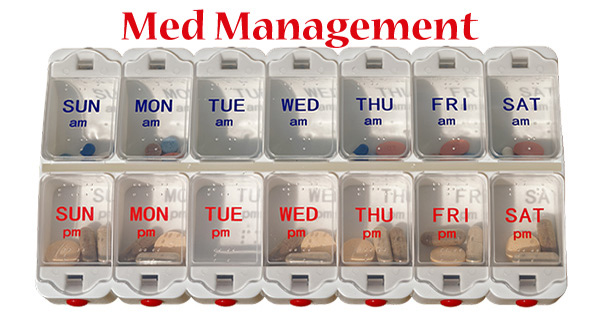
At times, I have been unable to manage all of my medications properly, even when using a weekly pill organizer. In the past, I have used a free online service called MyMedSchedule.com. This website has helped me to keep track of all my medications, how often I taken each medication, it sends me reminders to take my meds, and it sends me reminders to refill my meds. I can also print off a list of my medications that is wallet size so I have it with me in case I ever need it; when my doctors asks me what medications I’m on, all I have to do is pull out my list and hand it to them. Hopefully, this website can help some people organize and manage their medications with greater ease.

Keeping track of side effects is also important to medication management. It is critical to report all side effects to your psychiatrist so he/she can properly treat them. Some side effects, such as nausea or drowsiness, can be easily treated.

The following suggestions helpful for people who take multiple medications:

  1. Use a pill organizer: I fill mine up weekly to make sure that I take my morning and evening medications.
  2. Count your meds: Every week, when I fill up my pill organizer, I count the pills I have left. I put the bottles away as long as I have at least one full week worth of medication left in the bottle after filling up the pill organizer.
  3. Refill meds as needed: If I have less than one full week in the pill bottle, then I leave it on the counter so I remember to refill that prescription that week. I have never run out of medication using this method.
  4. Use alarms: I also set an alarm on my phone, which goes off every afternoon, to remind me to take my afternoon medication.
  5. Keeping some meds on me at all times: Some of my medications only need to be taken “as needed”, such as anti-anxiety medication and those that treat specific side effects. I keep these medications in my purse so I have them with me at all times.
  6. Use the free online services: The website mymedschedule.com can be used to keep track of all your medications, when to take your meds, and when to refill them.
  7. Talk to your psychiatrist and pharmacist: You can ask your psychiatrist about side effects, but your pharmacist will generally know more about all medication side effects and medication interactions.
  8. Don’t change your meds on your own: Despite side effects, it’s still essential not to make changes to your medications without first speaking with your psychiatrist about it.

Medications must be taken as prescribed in order for them to work to the best of their ability. This means that it is necessary to keep track of when to take meds and when to refill meds. Keeping track of side effects also helps to treat any medical issues that arise. Communicating with your psychiatrist is very important for medication management, which helps to ensure the best outcome.


Difficulties At The Pharmacy

Difficulties At The Pharmacy

Yesterday, I dropped off my weekly Clozapine prescription at the pharmacy. I asked the pharmacy technician if she could check to see if my lab work had come in. I told her that it gets faxed over from the lab every week, and that someone from the pharmacy normally puts a copy in my file. She looked at me weird, and said, “We don’t do blood work here.” I explained to her again, that I get my blood work done at a lab and then the lab sends my blood work to the pharmacy so I can get my prescription filled. She still didn’t understand; she told me again, “We don’t do blood work here anymore.”

Wow, I was surprised at how ignorant this woman was. If she had just taken 30 seconds to listen to my explanation, then she would understand. At this point, she went to the back of the pharmacy with my prescription. When she came back up front, I asked if she found my blood work results. Her response was, “I don’t know, I didn’t look.” I was so baffled that I just decided to leave instead of try to get this woman to understand me. I asked her to please call me if there were any problems filling the prescription.

Luckily, they were able to fill my prescription. The pharmacist must have found my blood work in my file. I think they’re finally getting used to receiving my blood work results and having me filling my weekly Clozapine prescription there. The pharmacy technician I had this odd interaction with was new, so I can understand her being confused; however, if she had just listed to my explanation, she would have understood easily.

Medication Changes Me: Good or Bad?

Medication Changes Me: Good or Bad?

I have been taking psych meds since I was 14 years old. Ever since I started taking medication, I have always been on a lot of meds. I currently take eight different psych meds, plus other medication for my physical health. I’ve spent more than half my life on medications, and I’ll probably spend the rest of my life taking medications.

Sometimes the meds help and sometimes they make things worse. Medications always have side effects that need to be treated. It’s a pain in the butt. Meds can cause both physical and mental changes. They tend to change the way I act, which is helpful for bipolar treatment, but sometimes it goes too far. I feel like the medications change who I am to begin with. The mental changes that take place are hard to deal with. Right now, I don’t like to go out in public unless I have to and I don’t enjoy things I used to care about. This sounds like depression, but it’s been this way even through manic episodes. Maybe it’s part of the PTSD. I can never tell what’s what anymore.

Will I ever know who I really am? Am I just going to continue to change depending on my medications? How much change is good, and how much is too much? These are questions I ask myself all the time. I was a different person when I was younger; I was social. Now, I’m nothing like that. I know a lot of it is because of my bipolar disorder, but I wonder if some of it is because of the medication as well. Will I ever really know? I guess I just wonder what’s really me and what’s because of the medicine?